
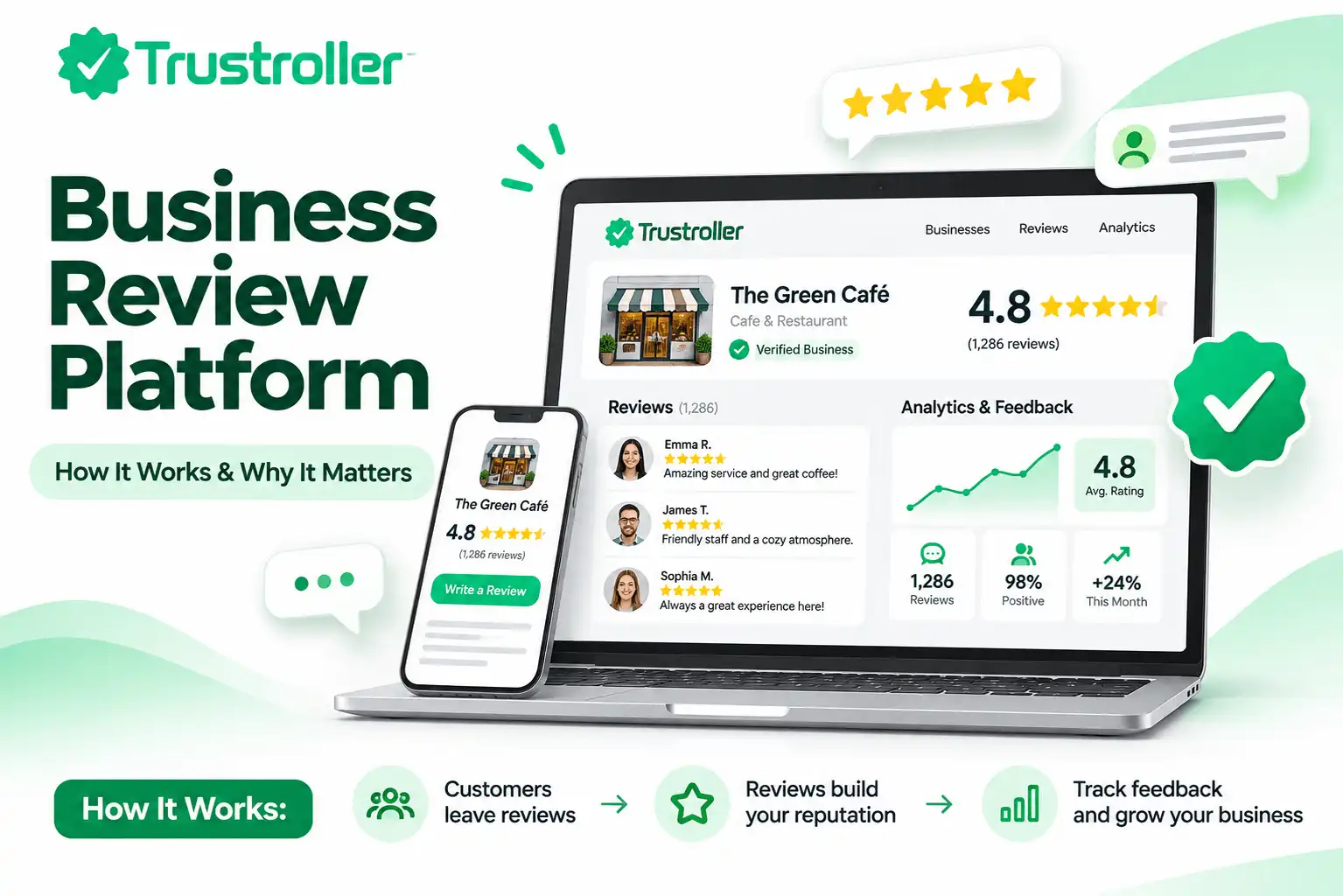
A business review platform is an online service where customers can share opinions, ratings, and experiences about companies, products, or services. These platforms create a public space where people can learn about businesses before making purchasing decisions. Instead of relying only on advertisements, promotional descriptions, or recommendations from friends, potential customers can explore feedback from individuals who have interacted with a company. For business owners, review platforms provide an opportunity to understand customer satisfaction, identify areas that need improvement, and demonstrate a commitment to transparent communication. Whether someone operates a small online store, a local service company, a hosting provider, or a growing digital business, customer feedback can influence how their brand is perceived. A well-managed review presence helps visitors evaluate a business using information beyond its own marketing materials.
The main purpose of a business review platform is to connect customer experiences with business accountability. Customers can describe what happened during a purchase, explain whether a product met expectations, or discuss the quality of support they received. Depending on the platform, they may also provide star ratings, upload supporting information, or update previously submitted feedback. Businesses may be able to claim their profiles, respond to reviews, and monitor patterns in customer comments. However, features and moderation policies differ between platforms. Some services focus on local businesses, while others support online stores, software companies, financial services, and other industries. A platform should make its review policies understandable so visitors can distinguish genuine customer feedback from promotional content. Reviews are useful evidence of customer experiences, but they are not guarantees that every future customer will have the same outcome.
For beginners, understanding how a business review platform works is important because online reputation is increasingly connected to customer research. Imagine someone searching for a web hosting company. They may compare pricing, storage, technical specifications, and customer support options before purchasing. They may also look for independent customer reviews to understand whether existing users have experienced reliable service. Similarly, a customer choosing an online store might examine delivery feedback, product descriptions, return experiences, and communication quality. Reviews can provide additional context that is not always visible on a company's website. Nevertheless, customers should consider the number, relevance, detail, and recency of reviews rather than relying entirely on a single rating. Businesses should also recognize that collecting feedback is only one part of reputation management. Listening to customers and making meaningful improvements are equally important.
Platforms such as Trustroller provide a starting point for exploring business reviews and online reputation. Business owners can evaluate whether a platform's available features, audience, and policies match their needs before establishing a presence. A responsible approach begins with accurate business information, honest customer invitations, and respectful responses to feedback. Companies should never purchase fabricated reviews, pressure customers into providing positive ratings, or attempt to conceal legitimate criticism. Instead, they should encourage customers to describe their actual experiences, whether positive, neutral, or negative. Over time, authentic feedback can help a business understand its strengths and weaknesses while giving prospective customers more information for their decisions. This guide explains why review platforms matter, how the review process typically works, how businesses can get started, and which mistakes should be avoided.
Why a Business Review Platform Matters for Businesses
A business review platform matters because customers often want reassurance before spending money with an unfamiliar company. A professional website, attractive product images, and detailed service descriptions can help establish an initial impression, but they do not always answer questions about real customer experiences. Reviews can help fill this information gap by showing how customers describe their interactions with a business. For example, someone considering a digital service may want to know whether the company communicates clearly, provides useful support, and handles problems responsibly. A collection of detailed reviews may offer insight into these questions, especially when customers explain the circumstances behind their ratings. This makes review platforms useful for businesses that depend on credibility, including e-commerce stores, agencies, software providers, and professional service companies. However, credibility should be earned through consistent service rather than manufactured through marketing tactics.
Another important benefit is the opportunity to improve customer relationships. Reviews are not simply public ratings; they can also function as a source of practical business feedback. Positive comments may identify services that customers particularly appreciate, while critical comments may reveal confusing instructions, communication delays, or unmet expectations. Business owners can examine recurring themes and decide whether changes are necessary. For instance, if several customers report difficulty understanding a checkout process, the company might simplify its instructions or improve its help documentation. If users frequently praise responsive support, the company can identify that strength and work to maintain it. This feedback process becomes more useful when businesses examine patterns rather than reacting emotionally to individual comments. A review platform therefore supports both public communication and internal learning when businesses use the information responsibly.
Customer reviews can also influence how people compare competing businesses. When two providers offer similar products at comparable prices, prospective customers may consider customer experiences as an additional factor. A company with detailed, relevant feedback and thoughtful responses may appear more approachable than one that provides little information about how it handles customer concerns. Nevertheless, review scores should not be interpreted without context. A business with a small number of excellent ratings is not automatically more reliable than one with a larger collection of mixed reviews. Differences in customer expectations, review dates, service categories, and moderation practices can affect the overall picture. Customers should evaluate review content alongside product specifications, service terms, refund policies, and direct communication. Business owners should focus on improving genuine customer experiences rather than treating their average rating as the only measure of success.
A business review platform may also contribute to a company's broader online visibility and reputation strategy. Public business profiles can create additional opportunities for customers to discover information about a brand, although search visibility is never guaranteed. Search engines evaluate many signals, and businesses should not assume that collecting reviews automatically improves rankings. For general guidance about establishing an online business presence, the Google Business Profile website offers information about managing business information on Google. Businesses can combine appropriate review platforms with accurate contact details, useful website content, transparent policies, and responsive customer service. The most sustainable approach is to view reviews as a reflection of customer experiences rather than a shortcut to popularity. When feedback is collected fairly and used to improve operations, a business can build a more informative public presence and make better decisions about its services.
How Does a Business Review Platform Work? Step-by-Step Guide
Understanding how a business review platform works becomes easier when the process is divided into practical stages. Most review websites connect three groups: customers who share experiences, businesses that receive feedback, and platform operators who establish publishing and moderation rules. Although individual websites have different interfaces, the general process follows a similar pattern. A business is listed or creates a profile, customers locate the relevant company, reviewers submit their experiences, and other visitors read the published information. Businesses may then respond to comments or use feedback to improve their operations. Some platforms also provide reporting tools, account verification, or profile management features. These services can help organize customer feedback, but their availability depends on the provider. For example, Trustroller explains that users can create accounts, select ratings, submit reviews, and manage their own published feedback. Understanding these basic functions allows beginners to participate without assuming that every review platform operates identically.
Step 1: Find or establish a business profile
The process usually begins with a public page identifying the company being reviewed. Customers should confirm the business name, website, location, or service category before submitting feedback. Businesses should check whether their information is accurate and whether the platform offers a way to manage or claim their listing. Incorrect information can confuse visitors, especially when several companies have similar names. A useful profile should clearly identify the business without making exaggerated claims about its reputation.
Step 2: Create a reviewer account when required
Some platforms allow limited anonymous participation, while others require registration. Trustroller states that users need an account to submit reviews. Account registration may support moderation and discourage certain forms of misuse, although registration alone cannot prove that every review is genuine. Customers should follow the platform's instructions, use accurate account information where required, and protect their login credentials.
Step 3: Submit an honest customer review
After locating the correct profile, a customer can describe a genuine interaction with the business. A useful review explains the service received, relevant expectations, what actually happened, and whether any problem was resolved. The customer may select a rating that reflects the overall experience. Reviews should avoid confidential payment information, passwords, private addresses, and unsupported accusations.
Step 4: Apply the platform's publishing and moderation process
Review websites may use automated checks, human moderation, reporting systems, or combinations of these methods to identify content that violates their policies. Trustroller describes automated and manual moderation measures, while also explaining that it does not independently verify the truth of every user submission before publication. This distinction matters because a published review should not automatically be interpreted as a fully verified transaction. Readers should evaluate the content carefully and consider additional evidence.
Step 5: Read, respond to, and learn from feedback
Once reviews become visible, potential customers can compare experiences and evaluate the business. Business owners may respond where the platform permits, particularly when feedback contains questions or concerns. A helpful response should acknowledge the customer's experience, explain relevant information, and offer a reasonable next step without exposing private details. Businesses can also review repeated complaints to identify operational improvements.
Step 6: Maintain an accurate review presence
Customer experiences and business practices change, so reputation management should be an ongoing responsibility rather than a one-time activity. Companies should periodically check profile details, respond to important feedback, and invite genuine customers to share independent opinions. Customers should also update reviews when significant circumstances change, where editing is supported. These stages illustrate how a business review platform can support communication, transparency, and continuous improvement without guaranteeing positive ratings or commercial success.
The most important principle is that published feedback should represent real experiences rather than manufactured promotional messages.
Common Mistakes When Using a Business Review Platform
One of the most common mistakes businesses make when using a business review platform is focusing entirely on obtaining five-star ratings. Positive feedback can be encouraging, but treating ratings as the primary business objective may create pressure to manipulate customer opinions. Some companies make the mistake of asking only satisfied customers for public reviews while directing dissatisfied customers away from the platform. Others may consider purchasing fabricated feedback or asking employees to pretend to be independent customers. These practices can mislead readers, undermine credibility, and violate applicable platform policies or consumer protection requirements. A responsible business should invite customers to describe genuine experiences without requiring a particular rating. The request should be neutral, voluntary, and consistent with the review platform's rules. Negative comments should not automatically be viewed as threats because they may reveal problems that deserve attention. A believable review profile can contain praise, criticism, and mixed experiences, reflecting the fact that customer expectations and outcomes vary.
Another mistake is ignoring customer complaints or responding defensively. Business owners sometimes interpret criticism as a personal attack, especially when they have invested considerable time and resources into their services. However, an emotional response can make a disagreement more difficult to resolve. Public arguments, insults, threats, or disclosure of private customer information may create additional concerns for prospective buyers. A better approach is to read the complaint carefully, investigate relevant facts, and respond professionally when appropriate. For example, if a customer reports delayed delivery, the company can acknowledge the concern and explain how the customer can contact support for further assistance. The business should avoid promising a refund, replacement, or resolution unless it can actually provide one. When a review appears inaccurate or suspicious, the appropriate response is to document relevant concerns and use the platform's reporting procedures. Businesses should not assume that criticism is fabricated merely because they disagree with the customer's description.
Customers can also make mistakes when reading reviews. A frequent problem is relying exclusively on the average star rating without examining individual experiences. A high score may look reassuring, but it does not explain whether reviewers purchased the same product, used the same service, or interacted with the business recently. Similarly, one strongly negative review may describe an isolated incident rather than a continuing problem. Readers should examine multiple comments, compare dates, and consider whether repeated concerns appear across different experiences. They should also distinguish personal opinions from factual claims. A customer saying that support felt slow is expressing an experience, while a specific claim about an advertised response time may require additional context. Review volume alone is not proof of reliability, and polished writing does not automatically establish authenticity. Customers should use reviews as one information source alongside business policies, service descriptions, and direct inquiries.
A final mistake is failing to understand the rules governing review submissions and business responses. Each platform may have different standards concerning eligibility, prohibited content, incentives, conflicts of interest, editing, and moderation. Businesses that ignore these requirements may unintentionally create compliance problems or encourage customers to publish unsuitable information. Reviewers should avoid copying someone else's comments, publishing private transaction details, or describing experiences they never had. Businesses should not request misleading endorsements or make unsupported claims that every published review has been independently verified. Before collecting or submitting feedback, users can consult the Trustroller Review Guidelines to understand the platform's expectations. Following clear policies helps protect the usefulness of the review system for both businesses and customers. The goal is not to eliminate every disagreement or guarantee that every review will be favorable. Instead, it is to create a fair environment where genuine experiences can be shared, concerns can be addressed, and readers can evaluate information responsibly.
Business Review Platform Checklist for Beginners
Before using a business review platform, business owners should establish a practical checklist covering profile accuracy, customer communication, review collection, moderation, and ongoing improvement. The first priority is confirming that the business profile represents the correct organization. Check the official name, website address, business category, contact information, and other publicly displayed details. Incorrect information may direct customers toward the wrong company or create confusion about who provides a particular service. The next priority is understanding the platform's available features. Determine whether customers need accounts, how ratings are submitted, whether businesses can respond publicly, and what procedures exist for reporting suspicious content. Businesses should also examine whether review editing, profile management, and moderation tools are available. These details help owners establish realistic expectations before inviting customers to participate. A review platform should complement existing customer service operations rather than replace them, because customers may still need private assistance with orders, payments, technical issues, or account questions.
The second part of the checklist concerns collecting genuine feedback. Businesses should decide when it is appropriate to invite customers to review their experiences. A completed purchase, delivered service, resolved support interaction, or other meaningful customer experience may provide a reasonable opportunity. Requests should remain polite and should not pressure customers to leave positive ratings. Companies should avoid offering rewards that depend on favorable feedback, arranging reviews from people who never used the service, or discouraging dissatisfied customers from participating. Any permitted incentives or relationships should be disclosed according to applicable rules. Businesses should also make the process understandable by directing customers to the appropriate profile rather than asking them to copy prepared praise. Review invitations can be brief, but they should explain that honest opinions are welcome. When customers provide feedback, businesses should respect their communication preferences and avoid sending excessive reminders. A consistent, transparent approach is more useful than collecting a large number of questionable ratings.
The third part focuses on monitoring and responding to reviews. Business owners should establish a reasonable schedule for checking newly published feedback, depending on the volume of customer interactions. Important complaints should be reviewed carefully, especially when several customers describe similar problems. Positive feedback can also provide valuable information about strengths that should be maintained. Responses should be professional, relevant, and proportionate to the issue. A simple acknowledgment may be sufficient for a positive review, while a detailed complaint may require investigation and private follow-up. Businesses should never publish sensitive customer information to defend themselves. When a reviewer makes a factual claim that appears incorrect, the company should seek clarification respectfully rather than immediately accusing the customer of dishonesty. If a review appears to violate platform rules, the appropriate reporting process should be followed. Regular monitoring helps businesses identify recurring themes and demonstrate that customer feedback receives appropriate attention.
The final part of the checklist is evaluating whether the review process is producing useful business insights. Instead of measuring success only through average ratings, owners can track recurring service concerns, response quality, customer questions, and operational changes resulting from feedback. For example, a company might discover that customers frequently misunderstand its refund policy. Rather than concentrating on the resulting ratings, it could improve the policy explanation and make relevant information easier to find. Businesses can also compare feedback across different services or time periods to identify areas requiring attention. Customers conducting their own research should follow a similar checklist by confirming the correct company, reading several reviews, checking dates, and comparing independent information. For additional guidance, the article What Makes a Business Review Helpful and Trustworthy? explains qualities that make customer feedback more informative. A good checklist encourages accuracy, fairness, privacy, and continuous improvement. When these principles guide everyday review management, the platform becomes more useful for customers researching businesses and for owners seeking to understand real experiences.
Frequently Asked Questions About Business Review Platforms
Understanding a business review platform often raises practical questions about costs, authenticity, ratings, business profiles, and customer participation.
What is a business review platform?
It is an online service that allows customers to share ratings and written feedback about businesses, products, or services. Visitors can use this information to compare experiences, while businesses may respond and learn from customer comments.
How does a business review platform work?
Typically, a company has a public profile, customers submit feedback based on real interactions, and the platform publishes eligible content according to its policies. Some services provide moderation, reporting, or management tools.
Can small businesses use review platforms?
Yes. Review platforms can be useful for small companies, online stores, agencies, hosting providers, and other businesses, provided the relevant platform supports their category. A small business does not need thousands of customers to benefit from meaningful feedback. Even a limited number of detailed, genuine reviews can help identify strengths and weaknesses. However, the value of feedback depends on its relevance and authenticity rather than quantity alone.
Are business review platforms free?
Pricing varies between providers. Some offer free customer accounts or basic business listings, while others provide paid management, analytics, or promotional features. Trustroller states that customers can read and write reviews without paying. Businesses should examine the current terms of any optional services before making purchasing decisions.
Are all online business reviews genuine?
No platform can guarantee that every published opinion accurately reflects a real experience. Moderation and reporting systems may help identify suspicious activity, but they are not perfect. Readers should examine details, dates, patterns, and other available information.
Can a customer leave a negative review?
Yes, when the platform permits it and the review accurately describes a genuine experience while following applicable rules. Constructive criticism can help other customers understand potential concerns and give businesses opportunities to improve.
Can businesses delete negative reviews?
Businesses generally should not expect legitimate criticism to be removed simply because it is unfavorable. Content that violates a platform's policies may be eligible for review or moderation through the appropriate process.
Do customer reviews improve search engine rankings?
Reviews may contribute to a business's overall online presence, but their effects depend on the search platform, context, and many other factors. Collecting reviews does not guarantee higher rankings, increased website traffic, or more sales. Businesses should combine review management with accurate business information, useful website content, and reliable customer service.
How should businesses respond to negative reviews?
The response should remain calm, respectful, and focused on the concern. Acknowledge the customer's experience, investigate the issue where possible, and offer an appropriate way to continue the discussion privately if sensitive details are involved. Avoid arguments, threats, and unsupported accusations.
How can a business encourage genuine reviews?
A company can politely invite real customers to share honest feedback after a meaningful interaction. Requests should not require a positive rating or misrepresent the reviewer's experience.
What makes a review trustworthy?
Relevant details, a genuine experience, reasonable explanations, and consistency between the rating and written feedback can make a review more useful, although no individual characteristic proves authenticity.
What is the difference between a business review and a testimonial?
A review is generally submitted by a customer through a review system, while a testimonial is often selected by a business for promotional use. Both can describe genuine experiences, but readers should consider how the content was collected, displayed, and moderated.
Should a business respond to every review?
Not necessarily. Responses are particularly useful when they answer questions, acknowledge feedback, or address concerns. The appropriate approach depends on review volume and the importance of each issue.
Can customers update their reviews?
Some platforms support editing or deleting previously submitted feedback. Trustroller states that registered users can manage reviews through their accounts.
What should someone do after finding a suspicious review?
They should consider available evidence and report possible policy violations through the platform rather than making public accusations without sufficient support.
Ultimately, the most useful way to approach online reviews is to treat them as individual accounts of customer experiences. Businesses should prioritize genuine service quality, and customers should consider multiple sources before making decisions. A business review platform is most valuable when everyone involved respects honesty, transparency, privacy, and fair communication.
Build Trust Through Genuine Customer Feedback
A business review platform provides a practical connection between customer experiences and business reputation. Customers can share feedback, compare service providers, and learn how companies respond to real concerns. Businesses can use the same information to understand expectations, improve communication, and identify opportunities for better service. However, a review platform should never be treated as a system for manufacturing popularity or guaranteeing commercial results. Its usefulness depends on whether the information is relevant, authentic, and presented fairly. Positive reviews may highlight successful experiences, while negative reviews can reveal areas requiring attention. Both types of feedback can contribute to a more informative public profile. For beginners, the most important lesson is that customer reviews should support informed decisions rather than replace independent research. Businesses should also remember that a high rating cannot substitute for accurate descriptions, transparent policies, reliable support, and responsible operations.
Getting started does not need to be complicated. A business can begin by reviewing its public information, understanding the chosen platform's policies, and deciding how to invite genuine customers to share their experiences. The invitation should be simple, voluntary, and neutral. Customers should feel free to describe what happened without being pressured to provide praise. Once feedback appears, the business can review comments, acknowledge useful suggestions, and investigate concerns when appropriate. Maintaining a consistent approach is more important than collecting a large number of reviews immediately. For example, a small online service provider might receive only a few reviews during its early operations. Those comments can still reveal whether customers understand the ordering process, receive clear instructions, and know how to request assistance. As the company develops, continued feedback can provide additional context about changes in customer expectations and service quality.
Customers also have responsibilities when participating in a review ecosystem. They should confirm that they are reviewing the correct business, describe genuine experiences, and avoid sharing confidential information. Ratings should reflect the written explanation, and comments should distinguish personal opinions from factual claims. When reading other people's reviews, customers should avoid assuming that one highly positive or negative experience represents every transaction. Comparing several sources, checking relevant dates, and reading business responses can provide a more balanced understanding. Review platforms may use moderation systems to discourage abuse, but users should not interpret publication as a guarantee of factual accuracy. Critical thinking remains important, particularly when reviews influence decisions involving substantial purchases, long-term subscriptions, or important services. A responsible review environment depends on both businesses and customers recognizing these limitations and communicating fairly.
For businesses looking to develop a more transparent online presence, Trustroller offers a place to explore customer reviews and learn about responsible feedback practices. Before participating, businesses should review the platform's current policies and available account features to determine whether they meet their needs. Owners can then focus on delivering good service, requesting honest feedback, and responding thoughtfully to customer experiences. The long-term objective should be to create a useful record of customer interactions rather than pursue a perfect public score. Genuine reviews can help potential customers ask better questions, and constructive criticism can help companies identify practical improvements. Start by exploring Trustroller, reviewing your business information, and encouraging authentic customer feedback. A sustainable online reputation develops through consistent actions, accurate communication, and a willingness to learn from real experiences. When businesses and customers approach reviews with these priorities, a business review platform can become a valuable part of a transparent and responsible digital marketplace.
Comments (0)