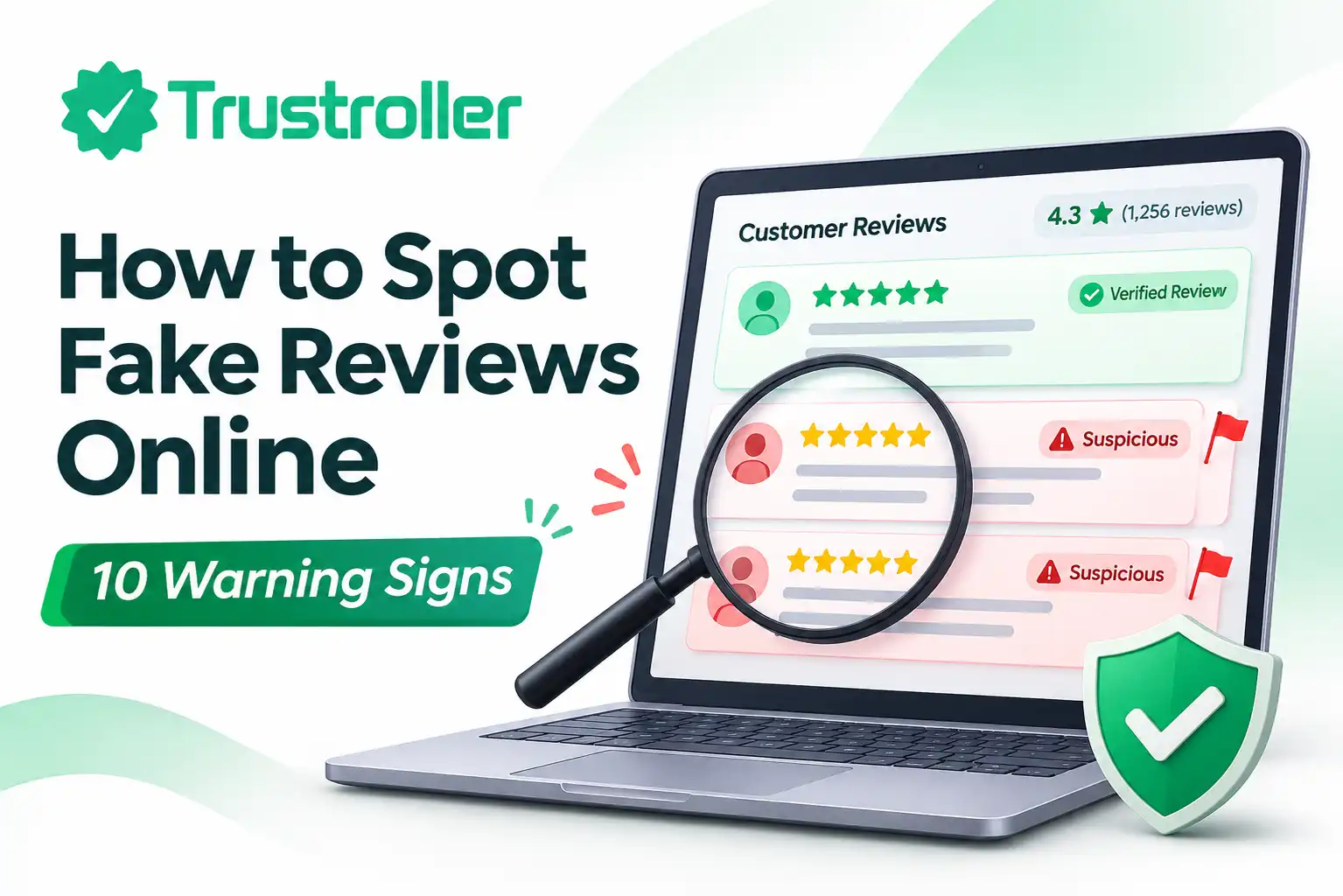
Online reviews have become an important part of everyday decision-making. Before purchasing a product, booking a hotel, choosing a hosting provider, hiring a professional, or ordering from an unfamiliar website, many people check customer ratings and written feedback. Reviews can provide useful information about product quality, customer service, delivery experiences, and business reliability. They allow potential buyers to learn from people who have already interacted with a company. However, not every review reflects a genuine customer experience, and understanding how to spot fake reviews is increasingly important for anyone who shops or conducts business online.
A fake review is feedback that misrepresents a genuine customer experience. It may be written by someone who never purchased the product, submitted by an individual with an undisclosed financial interest, or created to manipulate a business's public reputation. Fake reviews can be positive or negative. Some are designed to make a product appear more popular than it actually is, while others attempt to damage a competitor's credibility. Reviews may also be misleading when important incentives or relationships are hidden. Although not every biased or inaccurate review is deliberately fake, these different forms of unreliable feedback can make online ratings difficult to interpret.
The challenge is that misleading reviews are not always easy to recognize. Some contain obvious promotional language, repeated phrases, or unrealistic promises. Others sound natural, include specific details, and closely resemble genuine customer experiences. Modern writing tools can also produce convincing text, making writing style alone an unreliable method of identification. A review that appears suspicious is not automatically fraudulent, just as a well-written review is not necessarily authentic. Readers need to evaluate multiple signals rather than relying on one unusual sentence, an unfamiliar username, or a rating that seems too positive.
For consumers, learning to identify suspicious reviews can reduce the risk of disappointing purchases and misleading expectations. For business owners, the same knowledge can help protect brand reputation, encourage honest customer feedback, and support fair competition. A company that understands review manipulation is better positioned to respond professionally to questionable feedback without making unsupported accusations. Review platforms also have a responsibility to maintain transparent policies, provide reporting mechanisms, and help users distinguish useful customer experiences from promotional content.
The purpose of this guide is to explain how to spot fake reviews using practical observations that beginners can apply without specialized software. You will learn ten common warning signs, a step-by-step review verification process, frequent mistakes to avoid, and a checklist for evaluating online feedback. The guide also answers common questions about suspicious ratings, review patterns, and trustworthy review platforms. By combining careful reading with independent research, you can make better decisions while remaining fair to legitimate customers and businesses.
Why Identifying Fake Reviews Is Important
Customer reviews influence more than individual purchases. They contribute to business visibility, shape consumer expectations, and affect how people compare competing products or services. When a business receives consistently positive feedback, potential customers may interpret that reputation as evidence of reliability. Similarly, repeated negative reviews can discourage people from purchasing even when they have limited information about the underlying circumstances. This makes review integrity important for both consumers and organizations. Learning how to spot fake reviews helps people understand the difference between useful customer feedback and information that may have been created to influence public opinion.
One major concern is financial decision-making. Consumers frequently compare prices, ratings, product descriptions, and customer experiences before spending money. A misleading five-star review might exaggerate product performance, delivery speed, or customer support quality. If buyers rely on those statements without additional verification, they may purchase something that does not meet their needs. Negative review manipulation can create the opposite problem by discouraging customers from considering a legitimate business. In both situations, unreliable information interferes with informed decision-making and makes it harder for honest businesses to compete based on their actual performance.
Review manipulation can also affect customer trust in digital platforms. People expect review websites to provide access to independent experiences, even though no platform can guarantee that every submission is accurate. When users repeatedly encounter misleading feedback, they may become skeptical of online ratings altogether. That skepticism can reduce the value of legitimate reviews written by real customers. Maintaining confidence therefore requires a combination of platform moderation, transparent review policies, responsible business behavior, and informed readers. Consumers should understand that a review platform's verification features may improve confidence without proving every detail of an individual experience.
For businesses, suspicious reviews can create operational and reputational challenges. A company might receive feedback that appears unrelated to its products, contains incorrect information, or describes an experience its team cannot identify. However, a missing transaction record does not automatically establish that a review is fake. Customers sometimes purchase through third parties, use different account names, or describe experiences that occurred outside a company's usual support channels. Businesses should investigate carefully, preserve relevant information, and follow platform reporting procedures instead of publicly accusing reviewers without evidence. Constructive responses often demonstrate professionalism more effectively than confrontational messages.
Understanding review credibility also supports responsible online communities. Genuine feedback can help businesses identify recurring problems, improve customer support, and recognize successful practices. Reviews become more useful when writers describe specific experiences, disclose relevant relationships, and avoid exaggerated claims. Readers can contribute by evaluating evidence rather than rewarding the most dramatic statements. Businesses can contribute by requesting honest feedback without pressuring customers to leave positive ratings. Platforms can contribute through consistent policies and meaningful reporting options. Together, these practices make customer feedback more valuable and reduce opportunities for manipulation.
For readers interested in understanding the broader principles behind reliable feedback, Trustroller's guide, What Makes a Review Platform Trustworthy and Reliable?, can serve as a starting point for exploring review credibility. The essential lesson is that no single rating, comment, or visual indicator should determine a purchasing decision. A stronger approach combines several independent observations, considers the context of the business, and recognizes that genuine customers may have very different experiences with the same product or service.
10 Warning Signs of Fake Reviews Online
Understanding how to spot fake reviews begins with recognizing patterns that may indicate unreliable feedback. No single warning sign proves that a review is fabricated. However, several suspicious characteristics appearing together can justify additional investigation. The following ten signs can help consumers evaluate customer feedback more carefully.
1. Extremely Positive or Negative Language
Reviews that contain exaggerated praise or unusually aggressive criticism deserve closer attention. Statements suggesting that a product is absolutely perfect, guarantees extraordinary results, or has no possible disadvantages may be promotional rather than informative. Similarly, a negative review that attacks a company without describing an actual experience may provide limited value.
Genuine customers can certainly be enthusiastic or disappointed. The important question is whether their comments explain what happened. A useful positive review might describe delivery speed, product features, and customer support. A useful negative review might identify a specific problem and explain how the business responded.
2. Multiple Reviews Using Similar Wording
Repeated sentences, identical expressions, or unusually similar descriptions across different reviewer accounts can indicate coordinated activity. For example, several reviews may use the same promotional phrase while claiming to describe independent experiences.
However, similarity alone does not establish manipulation. Customers may naturally describe common product features using similar language. Examine whether the reviews contain distinct details, different experiences, and reasonable variations in writing style.
3. Sudden Increases in Review Activity
A business receiving many reviews within a short period may warrant closer examination, particularly when the reviews contain similar language or ratings.
Legitimate explanations include product launches, seasonal demand, promotional campaigns, and requests for honest customer feedback. Compare the review dates with business activity before drawing conclusions.
4. Generic Reviews Without Useful Details
Comments such as "Amazing service" or "Best company ever" provide little information about an actual purchase. Although these statements may be genuine, they do not explain what made the experience positive.
Look for reviews that discuss product quality, ordering, communication, delivery, support, or other relevant experiences. Specific details can make feedback more useful, although fabricated reviews can also contain convincing details.
5. Suspicious Reviewer Account Activity
Reviewer profiles may provide additional context. An account that repeatedly posts unrelated five-star reviews within a short period may deserve closer attention.
Check whether the reviewer has a history of varied experiences and whether previous comments appear consistent. Remember that new customers sometimes create accounts specifically to leave their first review.
6. Reviews That Sound Like Advertisements
Customer feedback should primarily describe experiences rather than repeat marketing messages.
Reviews filled with slogans, promotional claims, repeated brand names, or unrelated sales information may indicate promotional intent. This is particularly concerning when several reviewers use nearly identical advertising language.
7. Missing or Unclear Purchase Verification
Some review platforms display purchase verification indicators. These may help readers understand whether a transaction was confirmed through the platform.
However, verified purchases do not guarantee that every statement is accurate. Likewise, customers may have legitimate experiences without receiving a verification badge, particularly when purchasing through another channel.
8. Reviews That Contradict Basic Product Information
A review describing features that a product does not offer may raise questions about its accuracy.
For example, someone might praise a software service for a feature unavailable in the version they supposedly purchased. Before assuming dishonesty, check whether the product previously offered that feature or whether the customer used another package.
9. Undisclosed Incentives or Business Relationships
A reviewer who receives compensation, a free product, or another benefit may have a material relationship with the business. Such relationships should be disclosed when required.
Incentivized reviews are not automatically dishonest. The concern arises when relevant relationships are hidden or when compensation depends on expressing a particular opinion.
10. Ratings That Differ Sharply Across Platforms
A company might have overwhelmingly positive feedback on one website while receiving substantially different ratings elsewhere.
Differences can arise because platforms attract different customers, collect reviews at different times, or use different rating methods. Compare recent experiences and recurring complaints instead of assuming that one platform is necessarily inaccurate.
These warning signs are most useful when considered together. A new reviewer account, enthusiastic language, or a sudden increase in feedback does not independently prove manipulation. Readers should investigate the broader pattern and avoid publicly labeling individuals or businesses as dishonest without supporting evidence.
Step-by-Step Guide: How to Spot Fake Reviews Before Buying
A practical verification process makes review evaluation easier and more consistent. Instead of reading every available comment or depending entirely on automated detection tools, consumers can follow a structured approach. The goal is not to prove that every suspicious review is fraudulent. It is to identify which information deserves greater confidence and where additional research is necessary. This approach is particularly useful when evaluating unfamiliar online stores, professional services, software subscriptions, or businesses offering expensive products.
Step 1: Start with the overall review distribution
Open the business or product profile and examine the number of reviews, average rating, and distribution of positive, neutral, and negative feedback. A five-star average based on three reviews provides less information than a rating supported by hundreds of varied customer experiences. However, review volume alone does not establish authenticity. New businesses naturally have fewer customers, while established companies may receive feedback across multiple platforms. Consider the size, age, and type of business when interpreting its review history.
Step 2: Read recent positive and negative reviews
Do not limit your research to the highest-rated comments. Select several recent reviews from different rating categories and compare what customers describe. Look for recurring themes involving product quality, delivery, communication, refunds, or technical support. A repeated complaint may indicate an issue worth investigating, while an isolated negative experience may not represent the majority of customers. Pay attention to whether reviewers describe actual events rather than simply expressing strong opinions.
Step 3: Examine reviewer profiles and review dates
Where the platform provides this information, check whether reviewers have contributed feedback about other businesses. Look for unusual similarities in posting dates, writing patterns, and review subjects. A cluster of reviews appearing within one day might be connected to a legitimate customer feedback campaign. Nevertheless, if those reviews also contain identical wording and questionable account histories, further investigation may be appropriate.
Step 4: Compare feedback across independent sources
Search for the same business on other reputable review platforms, search engines, industry communities, and relevant customer discussion websites. Compare the issues mentioned rather than simply calculating another average rating. For additional context about how feedback shapes purchasing behavior, read How Customer Reviews Influence Buying Decisions. Independent perspectives can reveal whether customer experiences are consistent across different sources.
Step 5: Verify important business claims
Reviews should support your research, not replace it. Check the company's official website, contact information, product specifications, refund conditions, and customer support channels. If several reviews praise a particular guarantee, confirm that the guarantee actually appears in the business's published terms. For services involving ongoing subscriptions, examine cancellation procedures and any important limitations before purchasing.
Step 6: Make a decision based on combined evidence
Consider the reliability of the review sources, consistency of customer experiences, transparency of the business, and relevance of any complaints. If important questions remain unanswered, contact the company before committing. You can also review the FTC guidance on evaluating online reviews for additional consumer protection advice. The Federal Trade Commission recommends checking multiple sources and considering reviewer history and review timing rather than relying on appearance alone. A careful process cannot eliminate every risk, but it can help you avoid decisions based on a handful of misleading comments.
Common Mistakes When Identifying Fake Reviews
Even careful consumers can make mistakes when evaluating online feedback. One of the most common errors is assuming that every extremely positive review must be fake. Customers sometimes have genuinely excellent experiences and express their satisfaction enthusiastically. A business may deliver a product ahead of schedule, resolve an urgent problem, or provide unusually helpful support. Strong praise should encourage readers to examine the details, not automatically dismiss the review. Similarly, a highly negative review may reflect a legitimate problem that deserves attention. The intensity of a reviewer's emotions does not independently establish whether the experience occurred.
Another frequent mistake is trusting the overall star rating without reading individual comments. A numerical rating summarizes feedback but does not explain why customers were satisfied or disappointed. Two businesses with similar ratings may offer very different experiences. One might receive consistent praise for product quality but repeated complaints about customer support. Another might offer excellent communication while experiencing occasional delivery delays. The more useful choice depends on which factors matter most to the buyer. Reading several reviews provides context that a single number cannot communicate.
Some readers also place too much confidence in automated fake review detection tools. These services may analyze language, account activity, and review patterns to identify potentially suspicious feedback. However, automated assessments are estimates rather than definitive proof. Detection systems can incorrectly flag genuine reviews or overlook sophisticated manipulation. Writing style is particularly unreliable as a standalone indicator because customers have different language abilities, communication preferences, and writing habits. AI-generated text can also resemble natural customer feedback. Use detection tools as supplementary information rather than treating their conclusions as final judgments.
A related mistake is assuming that verified purchase badges guarantee complete accuracy. Verification may establish that an account completed a qualifying transaction, but it does not necessarily confirm every statement in the review. A genuine purchaser might misunderstand a product feature, exaggerate a complaint, or describe a problem caused by incorrect usage. Conversely, someone who purchased through a physical store or another website may leave an authentic review without a verification badge. Readers should understand what a platform's verification system actually confirms before assigning too much importance to the label.
Businesses sometimes make a different but equally serious mistake: responding aggressively to feedback they suspect is fraudulent. Publicly accusing a reviewer of dishonesty without adequate evidence can damage customer confidence and create unnecessary disputes. A better response acknowledges the concern, requests relevant details through appropriate channels, and explains the business's willingness to investigate. If the review appears to violate platform rules, the company can submit a report with supporting information. This approach respects legitimate criticism while addressing possible manipulation.
Finally, many consumers overlook the importance of changing circumstances. A review written several years ago may describe a product version, management team, or customer service process that no longer exists. Recent reviews may better reflect current operations, although older feedback can still reveal long-term patterns. Consumers should also avoid focusing only on reviews that confirm their initial opinions. If you already like a product, it can be tempting to dismiss every complaint. If you dislike a company, you may pay excessive attention to negative feedback. Balanced research requires considering evidence that challenges your expectations. Learning how to spot fake reviews is therefore not only about recognizing suspicious writing. It also involves understanding your own assumptions and evaluating information fairly.
Practical Checklist for Evaluating Online Reviews
Before making an important purchase, use a simple checklist to organize your research. A checklist reduces the likelihood of overlooking important details when a product looks attractive or a business has an impressive average rating. It also encourages consistency when comparing several companies. Rather than trying to determine whether every individual review is authentic, focus on whether the available feedback provides enough reliable information to support your decision. The following questions can be applied to online stores, hosting providers, professional services, software companies, and many other businesses.
Review verification checklist:
For expensive purchases, consider giving additional attention to the concerns most likely to affect you. Someone purchasing website hosting may prioritize uptime, technical support, renewal pricing, and data recovery options. Someone booking accommodation may care more about cleanliness, location, cancellation conditions, and recent guest experiences. Someone purchasing electronics may focus on durability, warranty coverage, and after-sales support. This targeted approach makes reviews more useful because it connects other customers' experiences with your own requirements.
Business owners can also use this checklist to evaluate their review profiles. If customers repeatedly mention unclear product information or slow communication, those comments may reveal opportunities for improvement. Rather than concentrating exclusively on ratings, companies should examine whether their services consistently meet customer expectations. Businesses looking to encourage authentic feedback can explore How to Get More Genuine Customer Reviews for practical approaches to collecting customer opinions without manipulating the results.
The checklist is most effective when used regularly, not only after a disappointing purchase. Taking a few minutes to examine feedback patterns can help consumers develop better research habits. Over time, readers may become more comfortable distinguishing useful customer experiences from vague, irrelevant, or potentially misleading information. The goal is not to become suspicious of every review. It is to recognize that reliable decisions require context, comparison, and reasonable verification. When uncertainty remains, gathering more information is generally more useful than making an unsupported accusation.
Frequently Asked Questions About Fake Reviews
1. What is the easiest way to spot fake reviews online?
The easiest starting point is to examine review patterns rather than judging a single comment. Look for repeated wording, unusual posting activity, irrelevant details, and significant differences between review sources. Read both positive and negative feedback to understand the broader customer experience. A suspicious pattern may justify further investigation, but it should not automatically be treated as proof of fraud. Even experienced researchers cannot reliably determine the authenticity of every review simply by reading its text. The most practical approach is to combine several observations with independent information about the product or business.
2. Can a five-star review be fake?
Yes. A five-star review may be fabricated, incentivized inappropriately, or submitted by someone who did not experience the product or service. However, many five-star reviews are genuine expressions of customer satisfaction. The rating alone cannot establish authenticity. Examine whether the reviewer provides relevant information and whether the feedback is consistent with other credible sources. The same principle applies to four-star, three-star, and lower-rated reviews. Manipulated feedback does not always use the highest or lowest possible rating, so readers should avoid relying exclusively on numerical scores.
3. Are negative reviews always trustworthy?
No. Negative reviews can be inaccurate, misleading, exaggerated, or deliberately fabricated, just like positive reviews. Some may describe genuine dissatisfaction, while others may result from misunderstandings or unrelated circumstances. Read the review carefully and consider whether it explains a specific experience. Check whether similar concerns appear in other feedback and whether the business has responded constructively. Avoid dismissing criticism simply because a company disagrees with it. At the same time, do not assume that an allegation is accurate without sufficient supporting information.
4. Can AI-generated reviews be detected?
AI-generated text may sometimes display repetitive structure, generic descriptions, or unusually polished language, but these characteristics are not reliable proof of artificial generation. Human reviewers can write similarly, and AI-assisted writing can accurately describe a real customer's experience. Automated detection tools also have limitations. A more useful question is whether the review represents an authentic experience, regardless of whether writing assistance was involved. Evaluate the reviewer context, relevant details, posting patterns, and independent evidence instead of relying on assumptions about writing style.
5. Should I trust verified purchase reviews?
Verified purchase indicators can provide useful context because they may show that a transaction occurred through a particular platform. However, the meaning of verification varies between websites. A verified purchase does not guarantee that every claim is accurate, nor does the absence of a badge prove that the reviewer never purchased the product. Consider verification alongside other signals, including review content, account history, and consistency across sources. When possible, read the platform's explanation of its verification process to understand what the indicator actually confirms.
6. What should I do if I find a suspicious review?
Start by examining the available evidence and checking the review platform's policies. If the feedback appears to violate those policies, use the platform's reporting feature and explain your concern factually. Avoid publicly identifying or accusing the reviewer without sufficient evidence. If you are a business owner, preserve relevant transaction and communication records where appropriate, while respecting customer privacy. If you are a consumer, compare additional sources before making a purchase. Reporting suspicious activity responsibly can help platforms investigate possible manipulation.
7. How can businesses protect themselves from fake reviews?
Businesses should maintain accurate customer records, monitor feedback regularly, and respond professionally to complaints. Encourage customers to share honest experiences without requiring positive ratings or offering rewards conditional on favorable feedback. When suspicious reviews appear, investigate the circumstances and use the platform's official reporting process. Businesses should also avoid attempting to suppress legitimate criticism. A consistent commitment to transparency, service quality, and fair review collection can support a trustworthy reputation over time.
Make Smarter Decisions with Reliable Reviews
Learning how to spot fake reviews is an important digital skill for modern consumers and business owners. Online feedback can provide valuable information about products, services, and customer experiences, but it should never be accepted without reasonable consideration. Suspicious language, repeated phrases, unusual posting patterns, questionable reviewer activity, and undisclosed incentives can all raise concerns. However, these characteristics are warning signs rather than definitive evidence of manipulation. A genuine customer may write an enthusiastic review, create a new account, or describe an experience differently from other buyers.
The strongest approach combines careful reading, independent comparison, and practical verification. Before making a purchase, examine recent reviews, consider both positive and negative experiences, and verify important business claims. Pay attention to how companies handle complaints and whether their published policies match customer expectations. Remember that a high rating does not guarantee satisfaction, while a negative review does not necessarily establish that a business is unreliable. Your goal should be to understand the overall customer experience rather than search for a perfect rating.
For businesses, authentic reviews are more valuable than artificially impressive scores. Honest customer feedback can highlight strengths, reveal service problems, and support meaningful improvements. Companies should encourage genuine opinions, disclose relevant relationships, and respond constructively to criticism. A transparent review environment benefits consumers who need reliable information and businesses that want to compete fairly.
Comments (0)