
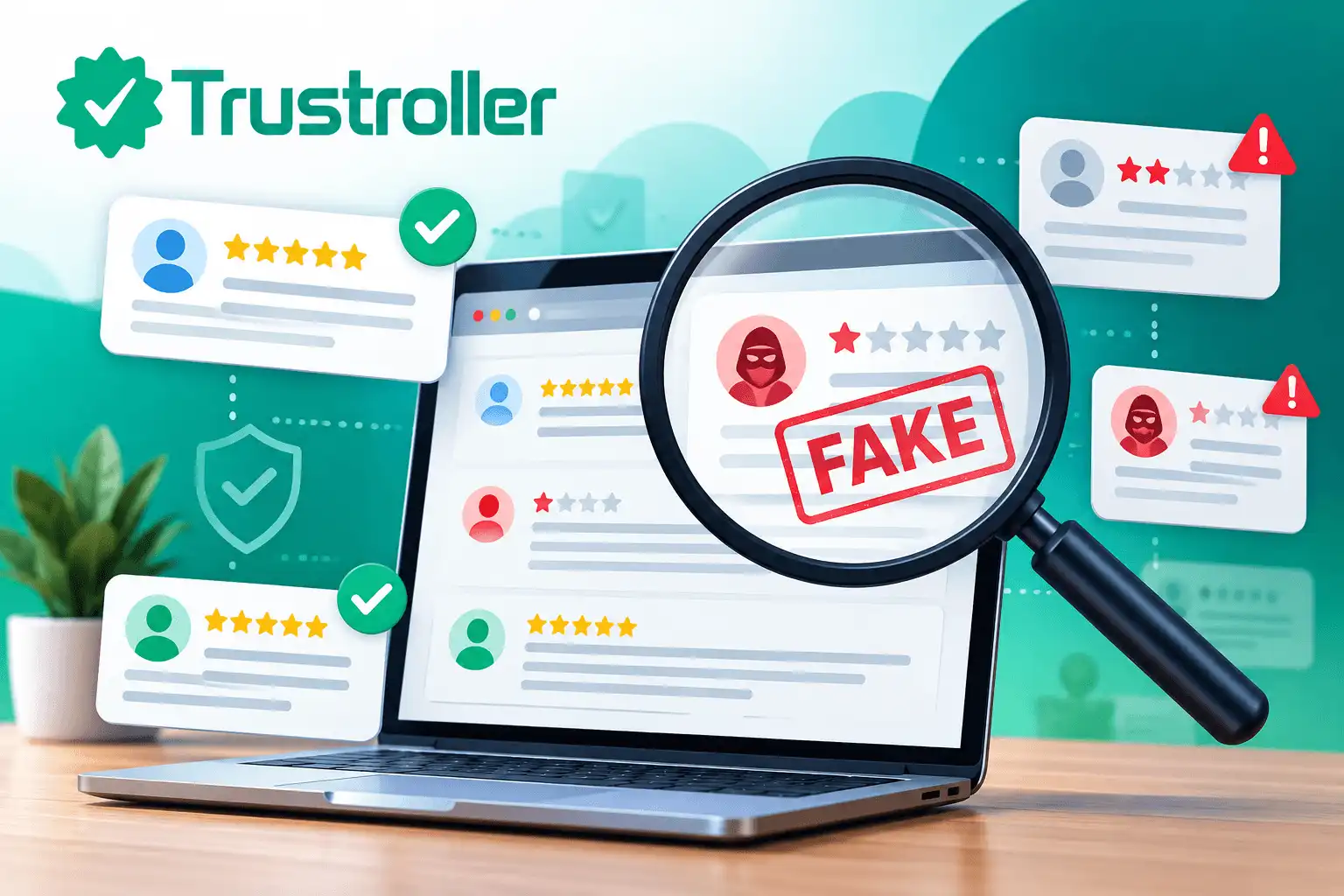
Online reviews influence how people choose a restaurant, software provider, online store, local service, hotel, consultant, or almost any other business. A strong rating can make a company look dependable, while a group of negative comments can create doubt before a potential customer even visits the website. The problem is that not every review reflects a genuine customer experience. Some reviews may be fabricated, copied, coordinated, written by people with a conflict of interest, or posted only to manipulate a score. That is why learning how to identify fake business reviews has become a practical skill for both customers and business owners. The goal is not to become suspicious of every positive or negative comment. Genuine reviews can be enthusiastic, brief, emotional, detailed, imperfect, or even badly written. Instead, the goal is to look for patterns, context, consistency, and supporting signals before deciding how much trust to place in a review. A single unusual review rarely proves anything by itself.
A more reliable approach is to compare several reviews, examine reviewer behavior when the platform makes that information available, look at timing, check whether the language sounds specific to the experience, and see whether the claims match what is known about the business. Businesses should use the same balanced approach. It can be tempting to label a harsh review as fake simply because it is unpleasant, but criticism is not evidence of fraud. A real customer can have a poor experience and describe it strongly. Likewise, a five-star review is not automatically fake because it is highly positive. Good review analysis separates suspicion from proof. It also avoids targeting reviewers, making public accusations without evidence, or trying to suppress legitimate criticism.
Trust is strongest when companies respond professionally, investigate patterns, and use platform reporting tools when there are reasonable grounds for concern. Customers benefit from the same discipline because fake feedback can distort purchasing decisions, especially when a product or service is expensive, unfamiliar, or difficult to evaluate before buying. If you are new to review analysis, start with a simple principle: no single clue should decide the case. Look for several independent warning signs that point in the same direction. This guide explains practical ways to identify fake business reviews without relying on guesswork. You will learn why fake reviews matter, how to inspect review content and reviewer patterns, how to compare timing and ratings, what common mistakes to avoid, how to build a repeatable checking process, and what to do when a review appears suspicious.
If you also want to understand how authentic feedback supports credibility, read TrustRoller’s guide on How to Build Trust With Online Customer Reviews. The purpose of this article is not to teach people how to create deceptive reviews or evade moderation. It is to help beginners recognize questionable patterns, make better decisions, and support a healthier review environment where genuine customer experiences are easier to find and more useful to everyone. In practice, the safest mindset is evidence-based rather than emotional. Treat reviews as one input among several, not as unquestionable facts. Compare them with business information, product details, customer-service records when you are the owner, and other independent sources when you are a buyer. The more important the purchase, the more useful it is to slow down and verify what you are reading before acting on it.
Why Fake Business Reviews Matter to Customers and Businesses
Fake reviews matter because they interfere with the basic purpose of a review system: helping people learn from real experiences. For customers, misleading feedback can make an ordinary product appear exceptional, make a reliable business look untrustworthy, or create a false impression that many people have had the same experience. That can affect where someone spends money, which provider they contact, and how much risk they believe they are taking. For businesses, manipulated reviews can damage reputation, hide genuine service problems, distort comparisons with competitors, and make it harder to learn from authentic customer feedback.
A company that receives a sudden wave of suspicious praise may enjoy a temporary rating increase, but an unrealistic review profile can also reduce credibility. A company targeted by suspicious negative reviews may face the opposite problem: potential customers can see an artificially poor picture that does not match normal customer experience. These risks are one reason review quality should be managed as part of reputation management rather than treated as a simple star-counting exercise. TrustRoller’s article on the 10 Benefits of Having a Strong Online Reputation explains why credibility, customer insight, relationships, and long-term trust matter more than chasing a perfect score.
Another reason fake reviews matter is that deceptive review practices can create legal and platform-policy problems. In the United States, the Federal Trade Commission has a Consumer Reviews and Testimonials Rule addressing certain fake or false reviews, the buying of reviews conditioned on a particular sentiment, undisclosed insider reviews, and other deceptive practices. Businesses operating elsewhere may face different laws and platform rules, so owners should check the requirements that apply to them instead of assuming one standard applies everywhere. The practical lesson is simple: do not buy, manufacture, coordinate, or secretly influence reviews, and do not ask employees, friends, contractors, or customers to pretend they had experiences they did not have.
For customers, the important point is that fake reviews are not always obvious. A fabricated review can be grammatically perfect and detailed, while a genuine review can contain spelling mistakes, short sentences, strong emotion, or very little detail. Some legitimate customers create an account only to review one business, and some experienced reviewers post frequently. That means surface-level clues should never be treated as automatic proof. A better method is to consider the complete review environment. Ask whether the wording contains concrete, relevant details; whether several reviews repeat unusual phrases; whether ratings appeared in an unnatural burst; whether a reviewer’s activity shows strange patterns; whether the business response adds verifiable context; and whether other independent sources tell a similar story. Think in probabilities rather than certainties.
One clue may raise a question; several unrelated clues may justify a closer look. Even then, the responsible response is usually to verify, document, and report through the platform rather than accuse someone publicly. This matters for fairness because false accusations can harm genuine reviewers and may discourage honest criticism. An effective review system needs room for both praise and complaints. The objective is not to remove every uncomfortable opinion; it is to distinguish authentic experience from coordinated manipulation as carefully as possible. When businesses and customers use that standard, reviews become more useful because the focus shifts from whether a comment is positive or negative to whether it appears credible, relevant, and grounded in a real interaction.
Step-by-Step Guide to Identify Fake Business Reviews: Content, Timing, and Reviewer Patterns
A practical way to identify fake business reviews is to use the same sequence every time instead of judging a review from one emotional reaction.
Step 1: Read the review for experience-specific detail
Genuine reviews often describe something connected to the transaction, such as the type of service, a feature used, delivery expectations, communication, a support interaction, or what happened before and after the purchase. Details do not prove authenticity, but they give you information that can be compared with other evidence. Be cautious when a review is extremely generic, uses only broad promotional language, or could be copied and pasted onto almost any business without changing a word. However, do not reject a review simply because it is short; a real customer may genuinely write only “fast delivery” or “helpful support.”
Step 2: Compare the wording with other reviews
Look for repeated sentences, unusual phrases, identical grammar patterns, or several reviews that follow the same structure. Businesses naturally receive similar comments about popular features, so repetition of a normal phrase such as “good service” means little. What is more interesting is a cluster of reviews containing unusually similar wording, the same sequence of claims, or highly specific phrases appearing again and again.
Step 3: Examine the timing
A sudden burst of reviews in a few hours or days can deserve attention, especially if the business normally receives feedback slowly. Timing alone is not proof because a legitimate marketing campaign, product launch, event, or request for customer feedback can create a real increase. Compare the burst with the business’s normal review history and any obvious event that could explain it.
Step 4: Look at rating distribution rather than only the average
A business with a very high or low average is not automatically suspicious. Instead, ask whether the distribution changes abruptly, whether a large cluster of extreme ratings arrives together, and whether the written experiences support those ratings.
Step 5: Inspect reviewer information if the platform shows it
Check whether the account has other reviews, whether those reviews cover unrelated businesses naturally, and whether the activity appears repetitive. A new account is not evidence of fraud. Many people create an account only when they finally decide to leave feedback. More meaningful signals include multiple accounts showing nearly identical behavior, the same unusual language across unrelated businesses, or a pattern of extreme ratings with little supporting context.
Step 6: Check factual consistency
Does the reviewer describe a product, location, policy, or service the business actually offers? Could the claimed experience have occurred during the stated time? A mistake may simply reflect memory or confusion, so give reasonable errors less weight than clear contradictions. When several signals line up—generic wording, copied phrases, unusual timing, repetitive account behavior, and factual inconsistencies—the review deserves more scrutiny. When only one weak signal appears, keep an open mind.
Step 7: Compare the suspicious review with other independent information
If you are a customer, check more than one review source, the business website, current product or service information, and any reliable records relevant to your decision. If you are a business owner, compare the claim with internal information you are legitimately allowed to use, such as order history, support tickets, appointment records, or delivery logs. Do not publish a customer’s private information while trying to prove a point. Sometimes a reviewer uses a nickname, different email address, family member’s account, or another purchaser’s details, so “I cannot find this name” should not automatically become “this review is fake.”
Step 8: Check whether the review describes a plausible customer journey
Ask whether the sequence makes sense: could the person have bought the item, used the service, contacted support, or experienced the event in the way described? Look for contradictions that can be checked objectively, but separate them from opinions. “The support was rude” is an opinion; a claim about an objectively impossible transaction may be more useful to verify.
Step 9: Read business responses and follow-up comments
A calm response may provide useful context, but a business denial is not proof that the reviewer is wrong. Likewise, a reviewer repeating an accusation does not automatically make it true. Treat both sides as information to evaluate.
Step 10: Apply the platform’s rules
Before reporting anything, understand what the platform considers prohibited. TrustRoller’s Review Guidelines explain that reviews should be based on genuine experiences and describe standards relating to accuracy, manipulation, conflicts of interest, and misleading activity. A report is stronger when it identifies a specific rule or credibility issue instead of simply saying, “I dislike this review.”
Step 11: Document the pattern
Record the review date, rating, relevant wording, links or identifiers available to you, similar reviews, and the reason for concern. Focus on evidence that a moderator can independently evaluate. Do not create fake accounts to investigate, contact reviewers aggressively, threaten them, or try to expose personal details.
Step 12: Report through the proper channel and allow the platform to review the case
If you are a business, you can also post a professional public response that protects customer privacy and invites the reviewer to provide enough information through a private support channel to locate the transaction. Keep the wording neutral. For example, you can say that you want to investigate the experience but need additional order or service details. Avoid saying that the reviewer is a liar unless you have a clear, lawful basis and the platform’s process supports that conclusion.
Step 13: Continue monitoring rather than treating one report as the end of the process
If suspicious reviews form a coordinated pattern, additional evidence over time may help moderation. If the review is verified as genuine, treat it as customer feedback and decide whether a process, product, communication issue, or service problem needs improvement. This final step is important because review analysis should protect authenticity without becoming a method for removing legitimate criticism. The best outcome is a review profile that reflects real customer experiences, including both positive and negative feedback, rather than one that merely looks perfect. That balanced standard protects honest customers, responsible businesses, and the usefulness of the review platform at the same time.
The purpose of this first pass is to identify which reviews merit verification, not to declare someone dishonest. Save links, dates, screenshots where permitted, and notes if you are managing a business profile, because organized evidence is much more useful to a platform moderation team than a complaint based only on suspicion. This disciplined approach also protects businesses from overreacting. If a suspicious review later turns out to be genuine, the company can still respond constructively, learn from the complaint, and preserve the customer relationship instead of creating a second reputation problem through an unsupported public accusation.
Common Mistakes When Trying to Identify Fake Business Reviews
Even people who understand the basic warning signs can make mistakes when trying to identify fake business reviews. The first common mistake is treating a negative review as fake simply because the business disagrees with it. A customer may describe an experience differently from an employee, and frustration can make the wording stronger than a company expects. Start with evidence, not sentiment. The second mistake is assuming that every perfect five-star review is suspicious. Loyal customers sometimes have genuinely excellent experiences, just as disappointed customers sometimes give one star. Extreme ratings are worth reading carefully, but the rating alone proves nothing.
The third mistake is relying on grammar, spelling, or writing style. Genuine reviewers come from different countries, age groups, education levels, and language backgrounds. Some write professionally; others use short sentences, translation tools, slang, or imperfect grammar. Writing quality is a weak authenticity test unless it forms part of a larger pattern such as copied text across many accounts. The fourth mistake is declaring a review fake because the reviewer has no visible history. New users are common. Account age becomes more useful only when combined with other signals such as many newly created accounts posting similar text at the same time. The fifth mistake is using automated detection tools as if their score were a final verdict. Software can help surface patterns, but false positives and false negatives are possible. Human review and context are still important. The sixth mistake is confronting the reviewer publicly before investigating. An aggressive response can make the business appear defensive, reveal private information, or turn a manageable complaint into a larger reputation issue.
A neutral response that asks for enough information to investigate is usually more useful. The seventh mistake is trying to “balance” suspicious negative reviews by arranging positive reviews. That replaces one integrity problem with another. The correct response to suspected manipulation is documentation, reporting, and genuine customer service—not manufactured praise. The eighth mistake is offering rewards only for positive feedback or telling customers what rating to leave. Ethical review collection should invite honest feedback without controlling the sentiment. The ninth mistake is ignoring clusters because each review looks plausible in isolation. Coordinated activity is often easier to notice when you compare timing, wording, rating patterns, and account behavior across a group.
The tenth mistake is overclaiming certainty. Unless you have strong evidence or a platform has confirmed a violation, describe a review as suspicious, questionable, or needing verification rather than definitively fraudulent. The eleventh mistake is forgetting privacy. Businesses may have transaction records, email addresses, phone numbers, payment information, or support logs, but that does not mean those details should be published in a public reply. Use private support channels and share only what is necessary with an authorized platform investigation. Finally, do not focus so heavily on fake-review detection that you stop learning from real criticism.
If several verified customers mention the same problem, the correct response may be to improve the product or service rather than search for reasons to dismiss the feedback. Good reputation management is not about constructing a flawless image. It is about making the public record more accurate, responding fairly, correcting genuine problems, and giving real customers confidence that their experiences will be heard. The more consistently you apply those principles, the easier it becomes to separate meaningful warning signs from normal variations in how people write and rate businesses.
Practical Fake Business Review Identification Checklist
Use the following checklist whenever you want to identify fake business reviews without jumping to conclusions. First read the review instead of judging only the star rating or headline. Ask whether the review describes an experience, product, service, interaction or outcome. Second compare the language with reviews on the same profile. Look for phrases that appear repeatedly sentences that look copied or groups of words that feel like they come from one template. Third check the dates. Note whether many reviews appeared in a short time and whether there was an event, promotion, launch or feedback campaign that might explain the increase. Fourth compare the rating pattern before during and after the cluster of reviews. A sudden shift may deserve investigation. Remember that rapid changes can sometimes be legitimate. Fifth review the account information that the platform makes public.
Consider the account’s history the variety of businesses reviewed the timing and the behavior but never treat an low‑activity account as proof of deception. Sixth, test factual claims against information you can responsibly verify. Confirm whether the product, location, service, policy, operating period or customer journey described in the review is possible. Seventh compare independent sources rather than relying on one review website. If the same strengths or complaints appear naturally across places and times that broader context can be useful. Eighth separate facts from opinions. A reviewer can dislike a service even if the business believes it performed correctly. Focus authenticity checks on inconsistencies and behavior patterns not whether you agree with the reviewer’s judgment. Ninth look for signals. Generic wording, timing, repetitive reviewer behavior and factual contradictions together carry more weight than any one clue alone.
Tenth preserve evidence if you manage the business. Keep dates, review identifiers, screenshots where allowed, support records and a short explanation of the suspected pattern. Do not collect personal information. Eleventh respond professionally when a public response is appropriate. Acknowledge the concern, state that you want to investigate and invite the reviewer to provide transaction details privately. Do not threaten, insult, expose or pressure the person. Twelfth use the platform’s reporting and moderation process. Explain the suspected issue clearly. Reference the applicable rule when possible. Thirteenth continue to monitor the profile after reporting. New activity may. Weaken your original suspicion. Fourteenth accept the result when the evidence supports a review and use the feedback to improve. Fifteenth keep your review collection ethical: ask real customers for honest feedback avoid directing the rating or wording disclose relevant relationships and never try to offset criticism, with manufactured reviews.
For a beginner this checklist can be saved as a review‑audit routine and used weekly or whenever unusual activity appears. It keeps the process consistent reduces decisions and helps you explain your concerns clearly if moderation support is needed. Importantly it reminds you that review authenticity is a question of evidence and context. The purpose is not to make every rating positive. It is to make the review environment more reliable so that customers can make informed decisions and businesses can learn from experiences. A repeatable checklist also helps teams work consistently: different employees can review the signals document their findings in the same way and avoid making impulsive decisions based on a single comment or an uncomfortable rating.
Frequently Asked Questions About Fake Business Reviews
Frequently asked questions can help turn these principles into everyday decisions.
Question 1: What is the easiest way to identify fake business reviews?
There is no single foolproof sign. The best beginner method is to look for a combination of signals: unusually generic or duplicated wording, sudden review bursts, extreme rating patterns, questionable reviewer behavior, and factual inconsistencies. One clue should create a question, not a verdict.
Question 2: Can AI-written reviews be detected just by reading them?
Not reliably. Polished, repetitive, or generic language may deserve attention, but genuine people can write in similar ways and AI-generated text can vary widely. Judge the overall evidence and the underlying experience rather than trying to identify a review from writing style alone.
Question 3: Is a new reviewer account automatically suspicious?
No. Many real customers create accounts specifically to share one experience. A new account becomes more relevant when it is part of a larger pattern, such as many new accounts posting similar wording or ratings in a short period.
Question 4: What should a business do after finding a suspicious review?
Document the reasons for concern, check relevant transaction or support records, respond calmly if a public response is useful, and report the review through the platform’s official process. Avoid public accusations without strong evidence.
Question 5: Should businesses remove every negative review they can challenge?
No. Negative feedback can be genuine and useful. A healthy review profile does not need to be perfect; it should be credible. Legitimate criticism can reveal service, communication, product, or support issues that deserve attention.
Question 6: Can businesses ask customers for reviews?
In general, businesses can invite genuine customers to provide honest feedback, but they should follow the applicable platform rules and local law. They should not manufacture experiences, secretly arrange deceptive reviews, or condition rewards on a required positive or negative sentiment. For additional regulatory context, businesses can consult the Federal Trade Commission’s Consumer Reviews and Testimonials Rule guidance, while remembering that legal requirements vary by jurisdiction and professional legal advice may be appropriate for specific compliance questions.
Question 7: How often should a business check reviews?
The right schedule depends on review volume. Small businesses may check weekly, while high-volume businesses may monitor more often. Consistency matters most. The final takeaway is straightforward: learning to identify fake business reviews is not about becoming cynical; it is about becoming more careful. Read the content, compare patterns, check timing, evaluate reviewer behavior, verify what can responsibly be verified, and use official reporting tools when several warning signs support your concern. At the same time, protect genuine reviewers by keeping an open mind and treating criticism fairly.
Trustworthy review ecosystems depend on both sides: customers sharing honest experiences and businesses responding without manipulation. If you manage a business, make authenticity part of your normal reputation process rather than waiting for a crisis. Review your profiles, document unusual activity, train team members to respond professionally, invite honest customer feedback, and use recurring complaints as information for improvement. If you are a customer, slow down before making important buying decisions and compare multiple sources instead of trusting one dramatic review.
Build Trust Through Genuine Customer Feedback
Ready to create an open and honest review presence? Discover TrustRoller look at your business profile. Use real customer feedback to build trust over time. A reputation based on experiences might not always look perfect but it gives customers something more important: an honest view of what its really like to work with you. The aim should never be to make it seem like everyone is always happy. Real businesses deal with customers who have different needs and honest review profiles naturally have a mix of experiences. What counts is whether those experiences are real whether the business pays attention to feedback and whether any strange behavior is dealt with using facts and proper methods.
By learning how to spot reviews customers become more careful when they buy and businesses become better at protecting their public image. Use the signs in this guide as hints, not conclusions. Look for patterns before you accuse anyone respect the privacy of reviewers and keep criticism visible even if its hard to hear. In the run this fair way of handling things can make reviews more helpful for everyone.
Customers get information to compare businesses and companies get more accurate feedback about what they're doing right and what they need to improve. When honesty, openness and good communication are part of daily reputation work there's need to go after a fake perfect score. Businesses can then concentrate on providing experiences that real customers really want to talk about. That is a base for customer trust, lasting reputation and real trust, than any fake rating ever could be.
Login or create account to leave comments
Comments (0)