
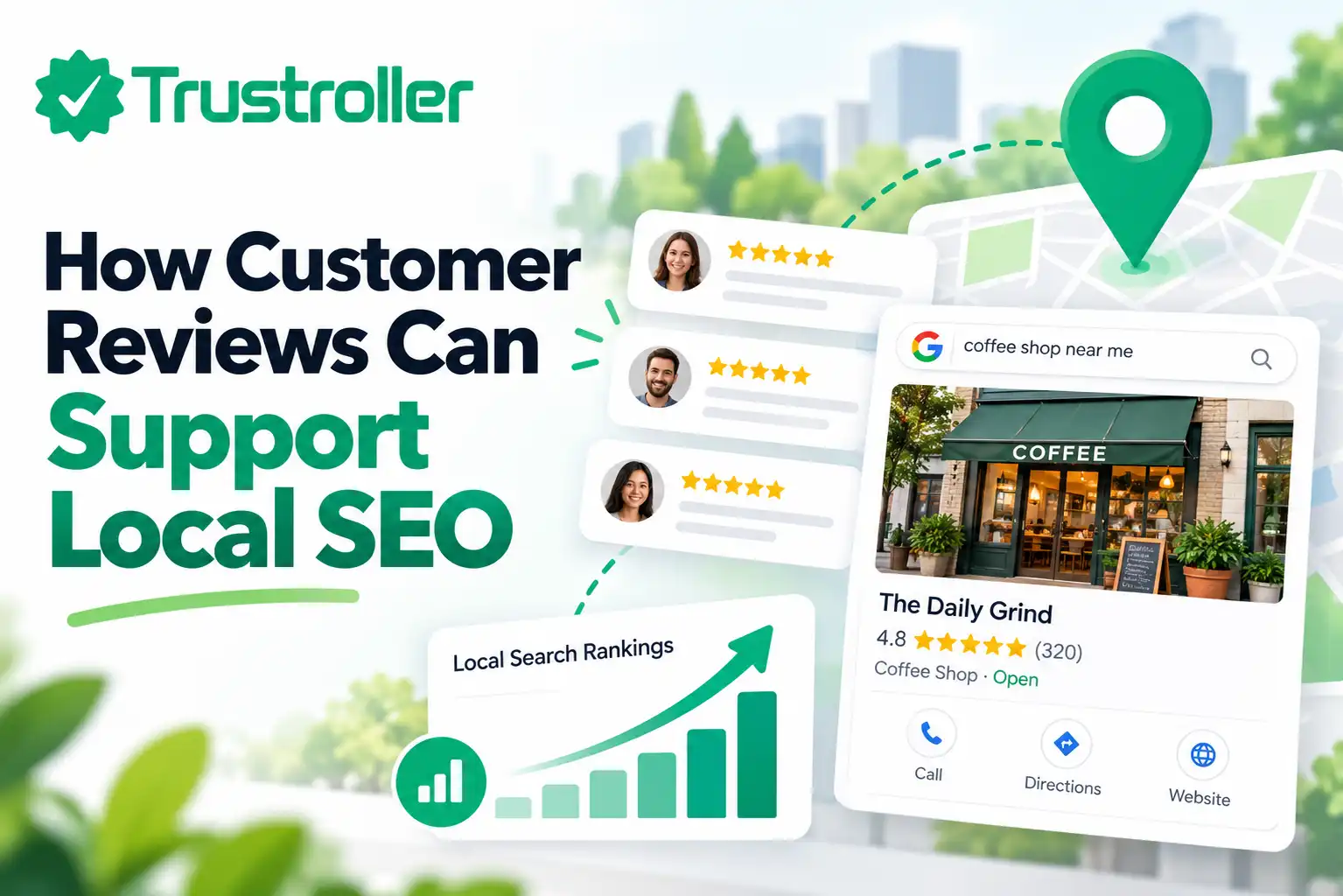
When people search online for a nearby restaurant, repair service, dental clinic, retail store, or professional business, they often want more than a company name and address. They want reassurance that the business is trustworthy, delivers what it promises, and treats customers professionally. Customer reviews provide this reassurance by sharing experiences from people who have already used a product or service. For businesses trying to attract customers in a specific geographic area, understanding the relationship between customer reviews local SEO and online reputation is an important part of building a sustainable digital presence. Local search engine optimization, commonly called local SEO, helps businesses appear in relevant searches connected to their locations or service areas. Reviews support this process by contributing useful business information, strengthening customer confidence, and helping potential buyers compare available options. A business with a well-maintained online profile and authentic customer feedback can make a stronger impression than one that provides very little information about its services. However, reviews should not be treated as a shortcut to guaranteed rankings. Search visibility depends on several factors, including relevance, distance, business information, website quality, and prominence. Reviews are one part of that broader picture, not a replacement for effective local SEO practices.
Consider a customer searching for an electrician in their neighborhood. The search results might display several businesses offering similar services. One business has a complete profile, accurate opening hours, photographs, and detailed customer reviews describing punctual appointments and helpful communication. Another business has incomplete information and almost no visible feedback. Even if both businesses provide excellent service, the first may be easier for the customer to evaluate. Reviews reduce uncertainty because they provide practical information beyond advertising claims. They can also help business owners understand what customers appreciate and which areas require improvement. For example, repeated comments about slow communication may indicate that a company should improve its response process. Positive comments about professional staff may reveal an advantage worth emphasizing in website content and business descriptions. This makes customer feedback useful for marketing, service development, and customer relationship management. Businesses should approach reviews as ongoing conversations rather than isolated ratings collected for promotional purposes.
An effective review strategy begins with genuine service experiences. Businesses can invite customers to share honest feedback, make review opportunities easy to find, and respond respectfully to both positive and negative comments. They should avoid purchasing reviews, inventing customer experiences, pressuring customers to leave positive ratings, or offering rewards specifically for favorable feedback. These practices can damage credibility and may violate platform policies. Instead, businesses should focus on providing consistent service and creating a simple, transparent feedback process. Platforms such as Trustroller can form part of a broader approach to organizing a business's online reputation and making customer feedback easier to discover, depending on the features available. In this guide, we will explain why reviews matter for local visibility, how businesses can collect and manage them responsibly, which common mistakes to avoid, and how to measure progress without relying on misleading promises. The goal is to help beginners build a practical, repeatable strategy that supports both customer trust and long-term local search performance.
Why Customer Reviews Are Important for Local Businesses
Customer reviews influence the way people discover, compare, and evaluate businesses. Before contacting a service provider, many customers search for independent information to understand whether a company appears reliable. Reviews offer a convenient source of that information because they describe real experiences in language that other customers can understand. A review mentioning friendly support, clear pricing, timely delivery, or professional communication may answer questions that a business website does not fully address. For local businesses, these details can be particularly important because customers often have several nearby alternatives. A person searching for a cleaning company, for example, might compare businesses based on service quality, responsiveness, availability, and customer satisfaction. Authentic reviews help make these differences visible. They also create opportunities for businesses to demonstrate accountability. When a company responds constructively to customer concerns, potential buyers can see how it handles problems. This may contribute to confidence even when the business does not have perfect ratings. A balanced collection of genuine reviews can sometimes be more informative than a profile containing only brief, enthusiastic comments.
Reviews also support local search discovery by adding information to a business's online presence. Google's local ranking guidance identifies relevance, distance, and prominence as major considerations. Review quantity and positive ratings can contribute to prominence, although Google does not disclose a complete formula for determining local rankings. This distinction matters because business owners sometimes assume that obtaining a specific number of five-star reviews will automatically move their listing to the top. No legitimate strategy can promise that outcome. Instead, reviews should be viewed as supporting signals within a larger optimization process. A complete business profile, accurate categories, consistent contact details, appropriate service descriptions, and a useful website remain essential. When these elements work together, potential customers can better understand what a business offers and whether it serves their location. Reviews may also include natural references to products, services, and customer experiences, helping people recognize whether the business matches their needs. Businesses should never instruct customers to insert artificial keywords into their feedback. Authentic language is more valuable for credibility than repetitive promotional phrases.
Another important benefit is customer insight. Reviews reveal patterns that business owners might otherwise overlook. A restaurant may discover that customers consistently appreciate its staff but experience delays during busy hours. A repair company may receive praise for technical knowledge while learning that appointment reminders need improvement. These observations can guide operational decisions, employee training, and communication improvements. Reviews therefore serve two purposes: they help potential customers make informed decisions, and they help businesses evaluate the experiences they provide. This feedback loop becomes especially valuable when owners review comments regularly rather than checking ratings only when complaints appear. Tracking common themes over time can reveal whether changes are working. For example, if a business improves its booking process, later feedback may indicate whether customers find appointments easier to arrange. Such improvements can support stronger relationships and encourage future customers to share their experiences voluntarily.
Finally, customer reviews can influence actions taken after a business appears in search results. A customer who sees useful feedback may be more comfortable calling, requesting directions, visiting a website, or booking an appointment. These actions are business outcomes rather than guaranteed ranking effects. Understanding this difference helps owners measure review performance more realistically. A successful review strategy should not focus exclusively on collecting the highest possible rating. It should encourage honest participation, make customer experiences understandable, and support continuous improvement. Businesses that maintain this approach can build a reputation based on evidence instead of exaggerated advertising. For beginners, the most useful starting point is simple: deliver dependable service, maintain accurate online information, invite authentic feedback, and respond professionally. These activities create a foundation that can support local SEO while improving the overall customer experience.
Step-by-Step Guide to Using Customer Reviews for Local SEO
Building an effective customer reviews local SEO strategy does not require complicated software or a large marketing budget. It requires consistent processes, accurate business information, and respect for customer choice. The first step is to establish a reliable online presence. Create or claim the appropriate business profile on platforms relevant to your customers, including Google Business Profile when your business is eligible. Confirm that the business name, address or service area, phone number, website, categories, and operating hours are correct. Avoid adding unnecessary keywords to the business name or creating duplicate listings for the same location. These practices can create confusion and may conflict with platform requirements. Once the profile is accurate, add helpful photographs and descriptions that explain the services offered. A complete profile gives customers useful context when they read reviews. It also helps distinguish genuine business information from incomplete or outdated listings. Owners should review these details periodically, particularly after changing locations, contact numbers, opening hours, or services.
The second step is to create a simple review invitation process. Identify appropriate moments when customers have had enough time to evaluate the service they received. For a restaurant, this may be shortly after a visit. For a home improvement project, it may be after the work is completed and the customer has confirmed the result. For an online service, the timing should reflect when the customer has actually experienced the product or support. Send a polite request through a suitable communication channel, such as email, a receipt, or a customer service follow-up. Keep the message short and explain that honest feedback is welcome. Provide a direct link to the relevant review page when the platform permits it. Do not ask only satisfied customers to participate, and do not suggest that a particular star rating is expected. Review invitations should be voluntary and should not involve incentives that violate platform rules. A transparent request might simply explain that customer experiences help other people understand the service and help the business improve.
The third step is to make review management a regular responsibility. Assign an appropriate team member to monitor new feedback, check whether reviews require responses, and identify recurring service concerns. Positive reviews deserve appreciation, but responses should remain natural and avoid repetitive promotional language. A simple thank-you that acknowledges the customer's experience is usually sufficient. Negative reviews require greater care. Read the concern carefully, avoid defensive language, and offer a reasonable way to discuss or resolve the issue. Do not disclose private customer information in public responses. If the review contains factual inaccuracies, explain the situation respectfully without attacking the reviewer. When a review appears to violate platform policies, use the platform's reporting process rather than attempting to suppress legitimate criticism. Maintaining a calm and consistent response style helps demonstrate professionalism to future customers who read the conversation.
The fourth step is to connect review insights with broader website and marketing improvements. Review comments can reveal common questions, service strengths, and customer expectations. Use these insights to improve frequently asked questions, service descriptions, appointment instructions, and support information. For example, if customers repeatedly mention uncertainty about delivery areas, clarify the locations served on the website. If reviews highlight the importance of emergency appointments, explain the actual availability and conditions of that service. Businesses can also study guidance about online reputation and customer feedback to develop a more organized review-management routine. The final step is measurement. Track review volume, rating patterns, response consistency, customer inquiries, and relevant local search performance over time. Compare trends across meaningful periods rather than assuming that every change resulted from reviews alone. Together, these steps create a responsible process that supports customer confidence, business improvement, and sustainable local visibility.
How to Respond to Reviews and Build Long-Term Trust
Responding to customer reviews is one of the most visible ways a business can demonstrate that it values feedback. Many owners focus heavily on collecting reviews but overlook the importance of ongoing communication. A review response is not only a message to the original customer; it is also public information that future customers may read while evaluating the business. A professional response can demonstrate attentiveness, accountability, and willingness to improve. For positive feedback, the goal is to express appreciation without turning the conversation into an advertisement. If a customer praises a team's helpfulness, a response can thank them for recognizing the staff's effort. If someone appreciates a smooth appointment process, the business can acknowledge that experience and express appreciation for the feedback. Avoid using identical responses for every review because excessive repetition can appear impersonal. However, owners do not need to write lengthy messages. Clear, courteous replies are usually more useful than elaborate statements filled with marketing keywords. The response should reflect the customer's actual comment while maintaining a consistent business voice.
Negative feedback requires a structured approach because emotional or defensive replies can make an ordinary service problem more damaging. Begin by understanding the concern. Determine whether it involves a missed appointment, unexpected charge, product issue, communication problem, or misunderstanding. If the customer describes a genuine mistake, acknowledge the concern and explain the next appropriate step. When additional information is needed, invite the customer to contact the business through an established support channel. Avoid requesting personal details in public comments. Businesses should not promise refunds, replacements, or other remedies that they cannot provide. They should also avoid arguing about whether a customer deserves to be dissatisfied. Even when the business disagrees with a review, a respectful explanation can be more effective than a confrontational response. Some complaints cannot be resolved publicly, and some customers may choose not to continue the conversation. In those situations, a clear response demonstrating willingness to investigate is generally preferable to repeated public messages.
A useful review-management process also includes internal follow-up. If several customers mention the same problem, the business should investigate whether its procedures need improvement. For example, repeated complaints about late appointments may indicate scheduling difficulties. Comments about unclear invoices may suggest that pricing explanations need attention. Rather than treating these reviews as isolated reputation problems, managers can use them to identify practical improvements. Assign responsibility for investigating recurring issues, document reasonable corrective actions, and review whether later customer experiences show progress. This approach connects reputation management with service quality. It also reduces the temptation to focus on hiding criticism instead of addressing its causes. Businesses should distinguish between genuine complaints, misunderstandings, and content that may violate review policies. Each situation requires an appropriate response, but none justifies creating fake positive reviews to counterbalance criticism.
Long-term trust develops through consistency rather than perfection. Customers understand that businesses sometimes make mistakes. What matters is whether a company provides accurate information, communicates respectfully, and makes reasonable efforts to resolve problems. A profile containing a range of authentic customer experiences can provide meaningful context about service reliability. Businesses can reinforce this credibility by keeping their website information current, explaining policies clearly, and making support channels easy to access. They should also ensure that testimonials displayed on their own websites accurately represent customer experiences and are used with appropriate permission. Selective presentation must not create a misleading impression about overall feedback. A trustworthy reputation strategy combines authentic reviews, transparent communication, and operational improvements. Over time, this can make the business easier to evaluate and more approachable to potential customers. For local SEO, that confidence is valuable because search visibility alone cannot guarantee that someone will choose a business. The customer must also believe that contacting or visiting the company is a sensible decision.
Common Customer Review Mistakes That Can Hurt Local SEO
One of the most serious mistakes businesses make is attempting to manipulate their online reputation through fake or misleading reviews. This may involve purchasing positive ratings, asking employees to impersonate customers, creating accounts to review the business, or arranging review exchanges with unrelated companies. Such practices undermine the purpose of customer feedback and can violate review platform rules and applicable consumer protection laws. Businesses should also avoid offering discounts, gifts, or payments in exchange for positive reviews. Even when an owner believes that these methods will improve visibility quickly, the potential consequences include lost customer confidence, removed reviews, profile restrictions, and reputational damage. A safer approach is to encourage genuine customers to describe their experiences voluntarily. Review requests should be neutral, and customers should be free to share positive, negative, or mixed opinions. Another problematic practice is review gating, where businesses privately screen customers and direct only those who express satisfaction toward public review platforms. This creates an artificially favorable picture and conflicts with the transparency expected by major review services.
Another common mistake is concentrating exclusively on the average star rating. Ratings are useful summaries, but they do not explain the full customer experience. A business with a strong rating may still receive repeated complaints about a particular service. Conversely, an isolated negative review may describe a problem that the business has already resolved. Owners should read review content carefully and look for recurring themes rather than reacting only to numerical changes. It is also important not to assume that every review affects search rankings in a predictable way. Local search algorithms consider multiple factors, and businesses cannot reliably calculate how many additional reviews are required to reach a particular position. Excessive attention to review counts can distract owners from more important activities, including improving services, correcting business information, and helping customers find accurate answers. Review quality should be understood in terms of authenticity and usefulness, not artificial keyword density or promotional wording.
Ignoring negative reviews is another avoidable problem. Some businesses respond only when customers leave praise because criticism feels uncomfortable. However, unanswered complaints may leave future customers uncertain about whether the business takes concerns seriously. This does not mean every review requires an immediate public response or that every disagreement must be resolved online. It means businesses should establish a reasonable monitoring routine and respond where a response can provide value. Another mistake is using automated responses without checking whether they match the review. Generic replies can create confusion, particularly when an apology appears under a positive comment or an enthusiastic thank-you appears under a serious complaint. Automation may help organize notifications and workflows, but public responses should be reviewed for accuracy, tone, and privacy. Businesses should also avoid including customer contact information, order details, medical information, or other sensitive data in public replies. Protecting privacy is part of maintaining trust.
A final group of mistakes involves weak business information and poor measurement. Some owners collect reviews while leaving outdated opening hours, incorrect phone numbers, broken website links, or inconsistent service descriptions across their profiles. Reviews cannot compensate for information that prevents customers from reaching the business. Others judge their strategy after only a few days, expecting immediate ranking changes or a sudden increase in sales. Local SEO typically requires ongoing attention, and performance may fluctuate because of competition, seasonality, search behavior, and platform changes. Businesses should evaluate trends across longer periods and consider multiple indicators. For additional practical ideas, owners can explore resources about managing customer reviews and business reputation. The central lesson is that sustainable visibility depends on genuine customer experiences, accurate information, and consistent improvement. Avoiding shortcuts protects both reputation and the usefulness of reviews for people making purchasing decisions.
Practical Local SEO Checklist, Measurement, and FAQ
A practical customer reviews local SEO checklist should begin with the fundamentals. Confirm that the business is eligible for the platforms where it appears and that every profile accurately represents its real operations. Check the business name, primary category, address or service area, contact information, website URL, and operating hours. Add clear service descriptions and relevant photographs without exaggerating capabilities. Next, create a neutral review invitation process that reaches genuine customers after an appropriate service experience. Keep requests voluntary and avoid rewards tied to review submission or rating outcomes. Make the review link easy to access, but do not pressure customers to respond. Assign responsibility for checking new reviews and establish a consistent response style. Thank customers for useful feedback, address legitimate concerns professionally, and protect personal information. Review recurring themes with staff so customer comments contribute to operational improvements. Finally, ensure that website content reflects actual services and answers the questions customers frequently raise.
Measurement should focus on meaningful trends rather than isolated numbers. Record how many genuine reviews the business receives during each reporting period, observe changes in overall ratings, and monitor how consistently customer concerns are addressed. Where available, use Google Business Profile performance information to understand relevant interactions, such as calls, website visits, or direction requests. Website analytics and search performance tools can provide additional context about local traffic and inquiries. These measurements should not be interpreted as proof that reviews alone caused a particular result. Changes may reflect advertising activity, seasonal demand, website improvements, competition, or other factors. A simple monthly report can combine review trends with customer inquiry data and operational observations. For official guidance about local visibility, consult Google's guidance on improving local rankings. Using primary platform guidance helps businesses avoid unsupported ranking claims and stay aligned with published recommendations.
Frequently asked questions often begin with whether customer reviews directly improve local SEO. Reviews can contribute to a business's local prominence, and Google states that more reviews and positive ratings can help local ranking. However, they are not the only ranking consideration, and no particular rating guarantees placement. Another common question is how many reviews a business needs. There is no universal number because customer expectations and competition vary by industry and location. Businesses should prioritize authentic, ongoing feedback instead of chasing an arbitrary target. Owners also ask whether negative reviews should be removed. Legitimate negative feedback should not be removed merely because it is unfavorable. Reviews that violate platform rules may be reported through the appropriate process. Another question concerns response frequency. Businesses should check reviews regularly and respond when they can offer appreciation, clarification, or useful assistance. A thoughtful response is more valuable than a rushed generic message.
Business owners may also wonder whether reviews on their own websites provide the same benefits as reviews on Google. Website testimonials can help visitors evaluate a company, but they should not be assumed to influence Google's local review signals in the same way as reviews published on its business platform. Any structured review data must follow applicable search engine guidelines, and displaying testimonials does not guarantee special search result features. Another frequent question is whether customers should mention the business's city or service keywords in their reviews. Businesses should not dictate review wording. Customers should describe their experiences naturally, using whatever details they consider relevant. Finally, many owners ask how long a review strategy takes to produce results. There is no fixed timeline. Trust develops through repeated customer experiences, while search performance depends on many changing factors. A responsible strategy is therefore continuous: maintain accurate profiles, provide reliable service, request honest feedback, respond professionally, and evaluate results over time. These habits create a stronger foundation than any attempt to manufacture ratings or promise immediate search improvements.
Turn Authentic Reviews Into Lasting Local Trust
Customer reviews are valuable because they connect real customer experiences with the information people use when choosing local businesses. They help potential customers understand service quality, compare options, and identify companies that appear responsive and reliable. They can also contribute to local search prominence when combined with accurate business information and broader SEO practices. The most effective approach is not to chase perfect ratings or manipulate review volume. Instead, businesses should create a consistent process for inviting honest feedback, responding respectfully, and using customer insights to improve their services. This process benefits both new customers and existing clients because it makes business communication more transparent. Reviews should support a genuine reputation, not replace one. A company that consistently delivers dependable service, communicates clearly, and addresses reasonable concerns has a stronger foundation for earning meaningful feedback over time.
For small businesses, the practical advantage of this strategy is its accessibility. A local shop, service provider, agency, or professional office can begin by checking its online listings and asking customers for honest feedback through appropriate channels. It does not need to promise rewards or launch an expensive campaign. The owner can review feedback weekly, identify common questions, and update business information when needed. Over time, these simple habits can create a clearer picture of the customer experience. They can also help teams recognize what they do well and where improvements are necessary. Businesses should remember that review platforms have their own rules and that those rules may change. Checking official guidance periodically is part of responsible reputation management. Customer trust is easier to preserve when every review request and response is transparent, accurate, and respectful.
A useful long-term plan connects reviews with other local SEO activities. Maintain a helpful website, publish accurate service information, keep business profiles updated, and make contact options straightforward. Monitor search visibility and customer inquiries without assuming that a single ranking factor explains every result. When customer feedback highlights an operational problem, investigate it and make reasonable improvements. When reviews identify a service strength, consider whether the website explains that benefit clearly and accurately. This creates a positive relationship between customer experience, reputation, and marketing. Businesses should also distinguish between visibility and conversion. Appearing in a local search result creates an opportunity, but customers still need enough trustworthy information to decide whether to contact the business. Authentic reviews can help close that information gap. The value of a review strategy is therefore broader than its possible contribution to rankings.
If your business is ready to develop a more organized reputation strategy, begin with an audit of your current profiles, review requests, customer responses, and website information. Identify one or two improvements that can be implemented immediately, such as correcting outdated contact details or creating a neutral post-service feedback request. Then establish a realistic schedule for monitoring comments and evaluating customer concerns. Explore Trustroller to learn more about presenting and managing your business's online reputation, and assess which available tools fit your workflow. The strongest call to action is simple: make authentic customer feedback part of your everyday business process. Encourage customers to share their genuine experiences, listen carefully to what they say, and use those insights to improve. With patience and consistency, customer reviews can support local SEO, strengthen credibility, and help potential customers make better-informed decisions. The objective is not to manufacture popularity but to build a trustworthy local presence that reflects the quality of the service customers actually receive.
Comments (0)