
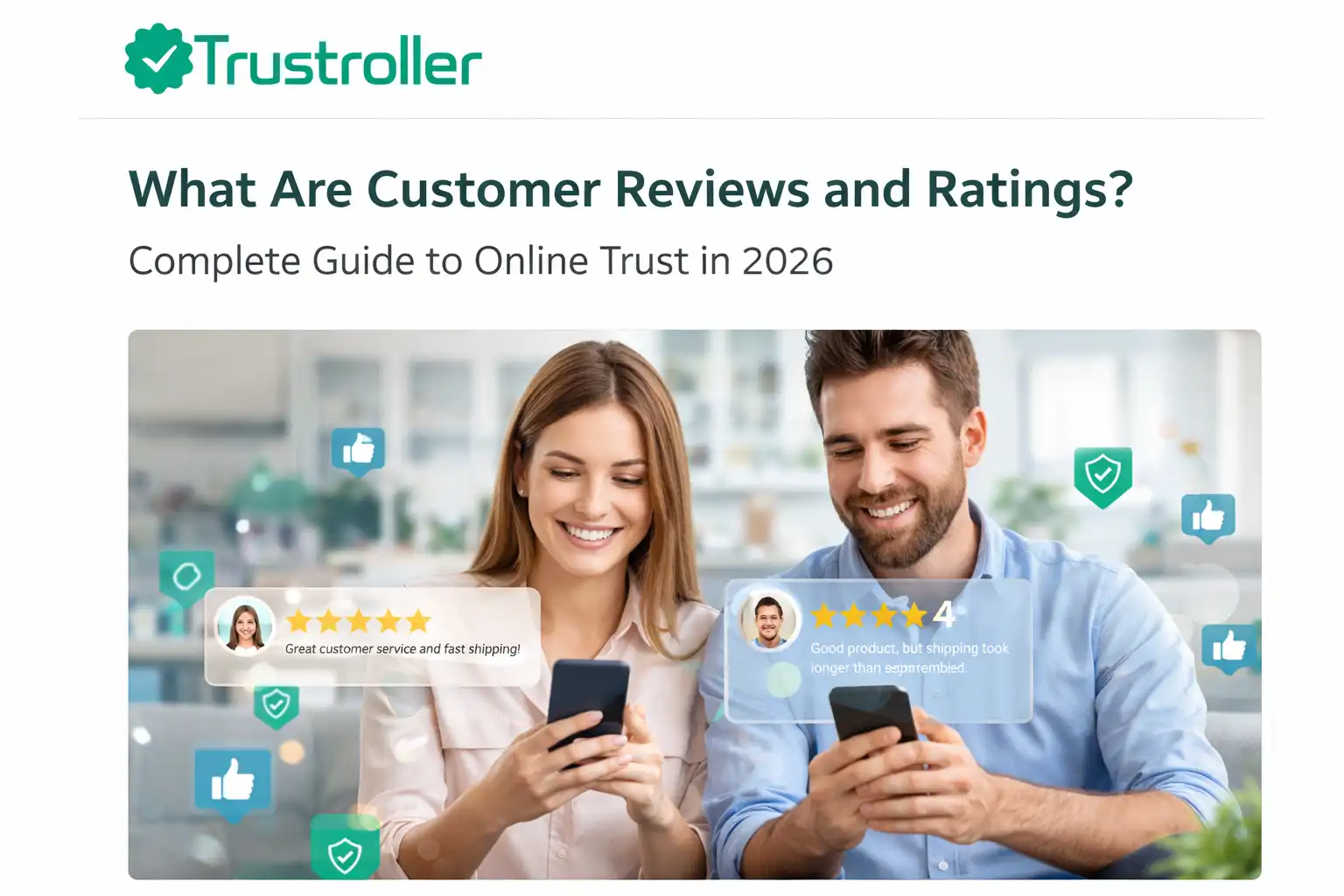
Why Customer Reviews Matter More Than Ever
In today's digital world, customer reviews and ratings play a crucial role in shaping trust online. Before purchasing a product, booking a service, or trusting a new website, most people look for reviews from other users. These reviews provide insights into real experiences and help potential customers make informed decisions.
Platforms like Trustpilot, Google Reviews, Yelp, and emerging review platforms such as TrustRoller allow consumers to share honest feedback about businesses and websites. This feedback system has transformed how businesses build credibility and how consumers protect themselves from scams.
Online reviews have become a key factor in digital reputation management. A business with strong positive reviews often attracts more customers, while negative reviews can warn others about potential risks.
Understanding how customer reviews and ratings work is essential for both consumers and businesses. In this guide, we will explore everything you need to know about online reviews, why they matter, and how they influence trust on the internet.
What Are Customer Reviews?
Customer reviews are written feedback provided by individuals who have used a product, service, or website. These reviews usually describe personal experiences and provide opinions about the quality, reliability, and performance of a business.
Reviews often include both positive and negative experiences. Positive reviews highlight good service, product quality, and customer satisfaction. Negative reviews may point out issues such as poor service, scams, delays, or misleading information.
Online reviews have become a modern form of word-of-mouth marketing. Instead of asking friends for recommendations, people now rely on online platforms where thousands of users share their experiences.
Review platforms give customers a voice and create transparency in the marketplace. Businesses that provide good service often benefit from positive feedback, while dishonest businesses are exposed through negative reviews.
What Are Ratings?
Ratings are numerical or star-based scores given to businesses or services. Most review platforms use a 1 to 5 star rating system, where:
1 star = very poor experience
5 stars = excellent experience
Ratings provide a quick overview of customer satisfaction. When people browse a company profile, the first thing they notice is usually the average rating score.
For example, a business with a 4.8-star rating is generally considered trustworthy and reliable. On the other hand, a business with a rating below 3 stars may raise concerns for potential customers.
Ratings make it easier for users to compare businesses quickly without reading every review in detail.
Why Online Reviews Are Important for Consumers
Online reviews help consumers make safer decisions on the internet. With millions of businesses operating online, it can be difficult to determine which companies are legitimate and trustworthy.
Reviews provide valuable insights into real customer experiences. By reading multiple reviews, consumers can identify patterns and determine whether a business consistently provides good service.
Reviews also help consumers avoid scams. Many scam websites are exposed by users who share their negative experiences online.
Another benefit of reviews is transparency. Businesses are held accountable for their actions because customers can publicly share their feedback.
Why Reviews Matter for Businesses
Customer reviews are equally important for businesses. Positive reviews can significantly improve a company's reputation and increase sales.
When potential customers see strong ratings and positive feedback, they feel more confident about choosing that business. Reviews also help businesses understand customer expectations and improve their services.
Search engines also consider reviews as a ranking factor. Businesses with strong reviews often appear higher in search results, which leads to more visibility and traffic.
In addition, responding to reviews helps businesses build relationships with customers and demonstrate professionalism.
How Review Platforms Work
Review platforms collect feedback from users and display it publicly on business profiles. These platforms usually allow users to create accounts, write reviews, and rate businesses.
Most review platforms follow a structured process:
Users submit their reviews and ratings.
The platform verifies or moderates the content.
Reviews are published on the business profile page.
Businesses can respond to reviews.
Consumers can browse and compare different companies.
Some platforms also use algorithms to detect fake reviews and maintain authenticity.
The Role of Trust in Online Reviews
Trust is the foundation of any review platform. If users believe that reviews are fake or manipulated, the platform loses credibility.
To maintain trust, review platforms use moderation systems, verification methods, and community guidelines. These systems help ensure that reviews are authentic and based on real experiences.
Transparency and honesty are essential for building a trustworthy review ecosystem.
Common Types of Online Reviews
There are several types of reviews commonly found online:
Product Reviews
Service Reviews
Company Reviews
Website Reviews
App Reviews
Each type of review helps consumers evaluate different aspects of a business.
How to Identify Fake Reviews
Fake reviews are a growing problem on the internet. Some businesses attempt to manipulate their reputation by posting fake positive reviews or negative reviews about competitors.
Signs of fake reviews include:
Extremely generic comments
Multiple reviews posted within a short time
Overly promotional language
Reviews without detailed experiences
Consumers should always read multiple reviews and look for balanced feedback.
Tips for Writing Helpful Reviews
Writing helpful reviews benefits both consumers and businesses. A good review should include:
Clear description of the experience
Specific details about the product or service
Honest feedback about strengths and weaknesses
Respectful and professional language
Detailed reviews help others make informed decisions.
The Future of Online Reviews
As digital commerce continues to grow, the importance of online reviews will also increase. Consumers will rely even more on review platforms to verify trust before making decisions.
Artificial intelligence, advanced moderation systems, and identity verification technologies will likely play a bigger role in improving review authenticity.
Review platforms that prioritize transparency and trust will continue to gain popularity.
Conclusion
Customer reviews and ratings have become an essential part of the modern internet. They help consumers make safer choices and encourage businesses to maintain high standards.
By understanding how reviews work and learning how to evaluate them properly, both consumers and businesses can benefit from a transparent and trustworthy online marketplace.
Platforms like TrustRoller aim to provide a reliable space where users can share honest experiences and build trust in the digital world.
Comments (0)